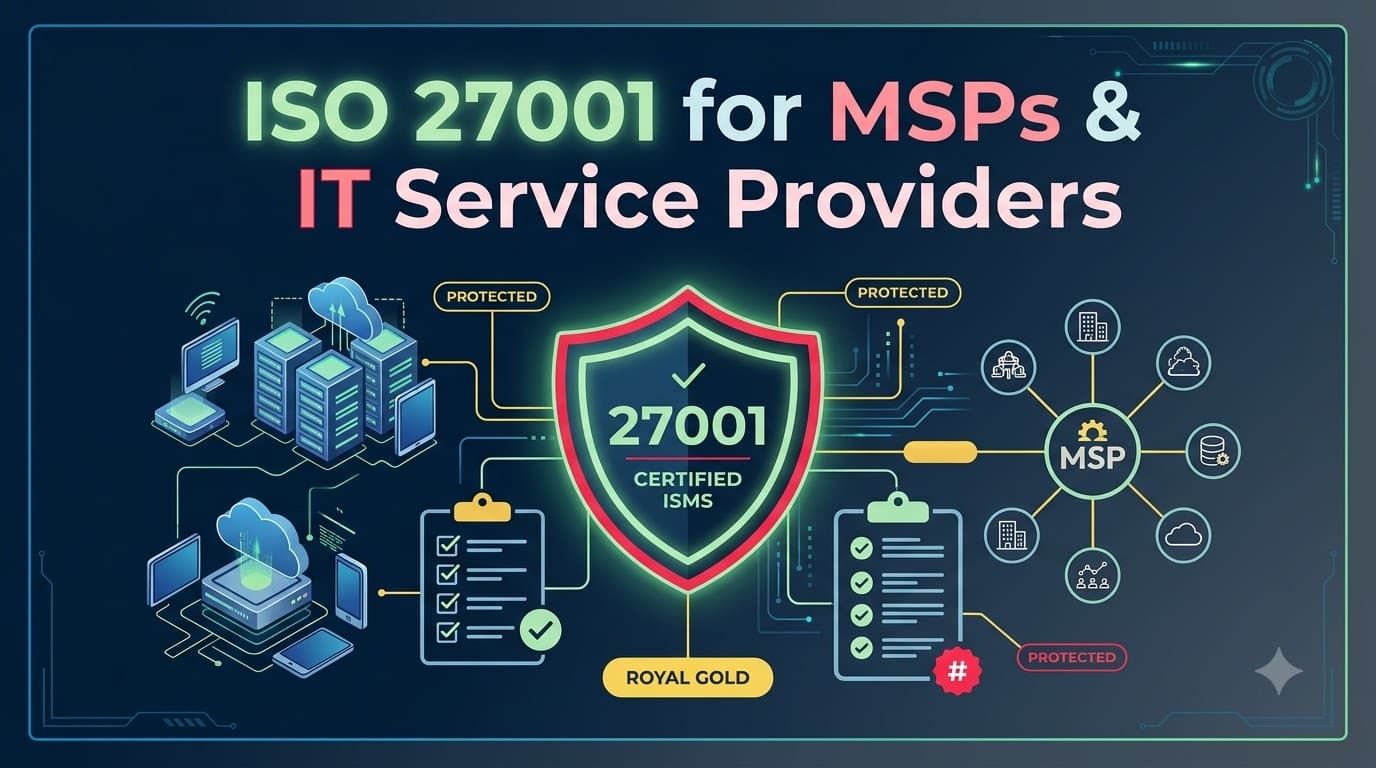
Marcus Ilunga built NorthPeak Managed IT over eleven years, from a two-person break-fix shop in a strip mall to a 34-person managed services provider running helpdesk, network management, and cloud administration for 61 clients across healthcare, legal, and light manufacturing. By early 2024, NorthPeak was doing just under $9.2 million in annual recurring revenue, and Marcus had started fielding acquisition interest from a regional MSP consolidator.
Then a technician's laptop got compromised through a phishing email that looked like a routine RMM vendor update notice. The attacker didn't need to break into NorthPeak's network — they needed the credentials already sitting in NorthPeak's remote monitoring and management platform, the same platform NorthPeak used to patch, monitor, and remotely access systems at every one of those 61 clients. Within six hours, the attacker had pushed a malicious script through the RMM tool to 14 client environments before NorthPeak's on-call engineer noticed the anomaly and pulled the plug.
No ransomware detonated. No data was confirmed exfiltrated. But three clients — a hospital network's outpatient billing arm, a mid-size law firm, and a manufacturer with defense subcontracts — terminated their contracts within 60 days, citing breach of the security warranties in their master service agreements. NorthPeak lost $1.4 million in annual recurring revenue, spent $310,000 on incident response and legal fees, and — the part that actually kept Marcus up at night — every remaining client's procurement team suddenly wanted a call about "what happened and what you're doing about it."
Eighteen months later, NorthPeak is ISO 27001 certified. Marcus didn't pursue certification because he loved documentation. He pursued it because the RMM compromise proved something every MSP eventually learns the hard way: an MSP isn't just an IT vendor, it's a single point of privileged access into dozens of other organizations' networks, and the market now expects proof — not promises — that this access is controlled. NorthPeak's win-loss data from the following year told the rest of the story: certification appeared as a required or heavily weighted line item in 22 of 28 competitive RFPs the firm responded to, and NorthPeak closed 9 of them, including a $640,000 healthcare IT contract it had lost to a competitor twice before.
Who This Is For
This guide is for MSP and MSSP leadership — owners, vCISOs, operations directors, and compliance managers — who manage IT infrastructure, endpoints, networks, or security operations on behalf of client organizations and need to stand up an ISMS that covers their own internal operations and the way they touch client environments. It assumes you already understand the basic case for certification (see who needs ISO 27001 and why if you don't) and are past the "should we do this" conversation. What follows is MSP-specific: how to scope an ISMS around a business whose product is privileged access to other people's networks, how to segregate multi-client environments so one compromised client can't become fourteen, how to harden the RMM and PSA tooling that makes your business model possible, and how to turn certification into the sales differentiator it should be. You'll walk away with a scoping framework, segregation and privileged-access control tables you can hand to your technical team, a supplier-assurance playbook for client due diligence questionnaires, and a realistic implementation timeline and budget.
Why MSPs Specifically Need ISO 27001
Every MSP has heard some version of "our clients trust us, that's the business." ISO 27001 exists because trust stated in a sales deck and trust demonstrated through an audited management system are different things, and the market — especially in regulated verticals — increasingly treats only the second as real. Three forces are converging on MSPs specifically.
First, client due diligence has industrialized. Ten years ago, a client's security review of their MSP was a phone call and a signed NDA. Today, mid-market and enterprise clients run formal third-party risk management programs, and the MSP relationship — because it typically involves privileged, persistent, remote access — gets flagged as one of the highest-risk vendor categories in their supplier inventory. That means detailed security questionnaires, sometimes an on-site or virtual audit, and increasingly a hard requirement for independent certification before a contract is signed or renewed.
Second, MSPs sit inside their clients' supply chains as suppliers subject to those clients' own supplier-security obligations. When your client implements supplier relationship security controls under 5.19–5.23, you are the supplier those controls point at. Their auditor will ask them how they assess and monitor your security posture. If you can hand them a current ISO 27001 certificate and Statement of Applicability, that conversation takes ten minutes. If you can't, it becomes a lengthy custom questionnaire, a site visit, or in the worst case, a lost deal or a non-renewal.
Third, MSPs are genuinely high-value targets, and buyers know it. A single compromised MSP credential set can be a skeleton key into dozens of downstream organizations — which is exactly what happened to NorthPeak, and what has happened publicly to larger providers in ways that made industry press. Clients aren't asking about your security because it's a box-ticking exercise; they're asking because a growing share of supply-chain breaches trace back to a managed service provider or software vendor rather than the victim organization itself.
Table 1 shows what shows up on the security questionnaires and RFPs MSPs are fielding today, based on patterns I've seen across dozens of MSP clients going through this process.
Table 1: What Client Due Diligence Now Asks MSPs
Due Diligence Area | Typical Question to the MSP | What Satisfies It |
|---|---|---|
Independent assurance | "Do you hold a current security certification?" | ISO 27001 certificate + Statement of Applicability |
Privileged access | "How do you control and monitor access to our environment?" | Documented PAM process, MFA, session recording, least privilege |
Segregation | "How do you prevent cross-contamination between clients?" | Network/tenant segregation evidence, access-scoping model |
Incident response | "How and when will you notify us of a security incident affecting us?" | Documented incident management process with notification SLAs |
Subcontractors | "Do you use offshore staff or subcontractors, and how are they vetted?" | Screening records, NDA/confidentiality terms, supplier oversight |
Tooling security | "How is your RMM/PSA platform secured?" | MFA, vendor patching cadence, access logging, vendor risk assessment |
Data handling | "Where is our data stored, backed up, and for how long?" | Data classification, retention, and backup documentation |
Business continuity | "What happens to our service if you have an outage or disaster?" | BC/DR plan with tested recovery objectives |
Audit rights | "Can we audit you, or will you share audit results?" | Certificate, SoA, and summarized internal/external audit outcomes |
"We used to spend three to four weeks per enterprise deal just answering security questionnaires from scratch, every time, slightly differently worded. Now we send the certificate, the SoA, and a two-page assurance summary, and most of that time collapses to a single call." — Priya Raghunathan, Director of Client Assurance, ShieldLine MSP
The pressure isn't uniform across every client vertical, and it's worth knowing where it's sharpest. MSPs serving healthcare clients inherit HIPAA-adjacent expectations even without being a covered entity themselves; MSPs touching card payment environments for retail or hospitality clients increasingly get asked about PCI DSS scope and requirements even when the MSP itself never handles cardholder data directly, simply because their access could theoretically reach systems that do. And MSPs competing for financial services or SaaS accounts in the US market run into SOC 2 Type II reporting expectations often enough that it's worth deciding early whether to pursue that alongside ISO 27001 rather than reactively, later, under deal pressure.
The MSP's Dual Role: Securing Your Own Business and Securing Your Access Into Theirs
This is the conceptual piece that trips up most MSPs building their first ISMS: you are not implementing ISO 27001 for one organization, you're implementing it for a business whose core operational risk lives at the boundary between your organization and every client you touch. Your ISMS has to cover two layers that are related but distinct.
The first layer is your own internal environment — the same layer any organization would scope: your corporate network, your finance and HR systems, your office(s), your employees, your own SaaS stack. Standard stuff.
The second layer is your service delivery infrastructure: the RMM platform, the PSA/ticketing system, the remote access and privileged access management tooling, the SOC/NOC monitoring stack, and the technician workstations and jump hosts that all reach into client environments. This layer is where an MSP's actual risk concentrates, and it's the layer generic ISO 27001 guidance written for a typical single-tenant business doesn't address well. A retailer's ISMS worries about protecting its own POS data. An MSP's ISMS has to worry about a compromise of its own service delivery layer cascading into every client it serves — which is precisely the scenario that cost NorthPeak three contracts.
Critically, client environments themselves are almost never in scope of your ISMS — you don't control your clients' networks, their patching, or their user behavior, and an auditor won't expect you to certify infrastructure you don't own. What is in scope is everything on your side of that boundary: how you access client environments, what data about clients you hold, how that access is provisioned, logged, and revoked, and how an incident touching a client gets managed. Getting this boundary right is the single most consequential scoping decision an MSP makes.
flowchart TB
    subgraph ClientA["Client A — Regional Healthcare Group"]
        A1[Client Network & EHR Systems]
    end
    subgraph ClientB["Client B — Law Firm"]
        B1[Client Network & Case Systems]
    end
    subgraph ClientC["Client C — Manufacturer"]
        C1[Client Network & OT Systems]
    end

    subgraph MSP["MSP ISMS Scope — NorthPeak Managed IT"]
        RMM[RMM Platform]
        PSA[PSA / Ticketing & CMDB]
        PAM[Privileged Access Mgmt / Vault]
        SOC[SOC-NOC Monitoring & Logging]
        STAFF[Technician Workstations & Jump Hosts]
        CORP[Corporate IT — Finance, HR, Email]
    end

    PAM -->|scoped, time-limited privileged access| A1
    PAM -->|scoped, time-limited privileged access| B1
    PAM -->|scoped, time-limited privileged access| C1
    RMM -->|monitoring agents| A1
    RMM -->|monitoring agents| B1
    RMM -->|monitoring agents| C1
    SOC -->|centralized log ingestion| RMM
    SOC -->|centralized log ingestion| PAM
    STAFF --> PAM
    ClientA -->|supplier due diligence, contracts, audit rights| MSP
    ClientB -->|supplier due diligence, contracts, audit rights| MSP
    ClientC -->|supplier due diligence, contracts, audit rights| MSP
"The mistake I see most often is an MSP scoping their ISMS like a law firm — just the office, just the laptops, just HR. That misses the entire point. Your RMM tenant and your PAM vault are your crown jewels. If those aren't in scope, the certificate isn't worth much to a client evaluating you as a supplier." — Dana Whitfield, vCISO, Cascade Security Partners
Scoping an MSP ISMS: What's In and What's Out
Defining the scope of your ISMS is Clause 4.3 work, and for an MSP it deserves more deliberation than the standard's brief treatment suggests, because scope decisions directly shape what a client sees when they ask "is our service covered by your certificate?" There are three common scoping models, and the right one depends on your service lines and how much of the business touches client environments.
The narrowest model scopes only the "managed services delivery" function — the RMM, PSA, PAM, SOC/NOC, and the staff who operate them — and excludes unrelated business units (say, a hardware resale arm with no client network access). The broadest model scopes the entire company. Most MSPs land in between: the full service delivery stack plus corporate IT, with clearly documented exclusions (e.g., a physically separate hardware fulfillment warehouse with no logical connectivity to client-facing systems).
Whichever model you choose, document the boundary explicitly and be ready to defend it to both your certification auditor and your clients' procurement teams — a scope that quietly excludes the RMM platform will get noticed and will undermine the credibility of the certificate with sophisticated buyers.
Table 2: MSP ISMS Scope — Typical In/Out Decisions
Component | Typically In Scope | Typically Out of Scope | Notes |
|---|---|---|---|
RMM platform and agents | Yes | — | Core service delivery risk; must be in scope |
PSA/ticketing and CMDB | Yes | — | Holds client asset, credential, and contact data |
PAM/credential vault | Yes | — | Highest-risk single point of failure |
SOC/NOC monitoring stack | Yes | — | Central log aggregation and detection |
Technician workstations & jump hosts | Yes | — | Primary access path into client networks |
Corporate finance/HR/email | Usually yes | — | Standard corporate risk; often included for a clean scope story |
Client-owned networks and endpoints | — | Yes | Not owned/controlled by the MSP; covered by client's own ISMS if they have one |
Client data held in MSP systems (tickets, backups, credentials) | Yes (as an asset) | — | The data is in scope even though the client network isn't |
Unrelated business units (e.g., hardware resale with no client access) | — | Case by case | Document rationale for exclusion clearly |
Subcontracted/offshore support teams | Yes (as interested party/process) | — | Must be covered by supplier controls even if legally separate |
Interested parties matter more for an MSP than for most organizations, because your clients are simultaneously customers, sources of contractual security requirements, and (in a real sense) part of your threat model. Document them formally rather than treating this as a formality — an auditor will expect to see client contractual requirements, cyber-insurance conditions, and regulatory obligations you inherit by proxy (a healthcare client's HIPAA exposure, a defense subcontractor's CMMC flow-down requirements) reflected in your risk assessment.
MSP-Specific Risk Scenarios Worth Documenting Explicitly
Generic risk assessment templates built for a single-tenant business will miss the risk scenarios that actually keep MSP owners up at night. When you're populating your risk register, make sure these MSP-specific scenarios are represented as distinct entries rather than folded into generic categories like "unauthorized access" — a specific, named scenario is far more likely to get a proportionate, specific control response than a vague one.
Table 3: MSP-Specific Risk Scenarios for the Risk Register
Risk Scenario | Illustrative Example | Likely Business Impact | Primary Control Area |
|---|---|---|---|
Single compromised credential cascades across clients | Technician's RMM login phished, reused across 10+ client environments | Multi-client incident, contract terminations, reputational damage | 8.2 Privileged access rights; 5.17 Authentication information |
RMM/PSA vendor-side compromise | Tooling vendor's infrastructure breached, malicious update pushed to all customers | Simultaneous compromise across entire client base, outside the MSP's direct control | 5.21 ICT supply chain; incident response plan assuming vendor compromise |
Client blames MSP for a client-side failure | Client's own misconfiguration causes an incident, client alleges MSP negligence | Legal/contractual dispute, reputational risk even if MSP is not at fault | 5.31 Legal/contractual requirements; clear contract scoping of responsibilities |
Departing technician retains access | Technician leaves, access to one or more client systems isn't fully revoked | Unauthorized access window, potential insider risk | 6.5 Responsibilities after termination; 5.18 Access rights |
Client offboarding leaves residual access or data | MSP relationship ends, but agents, credentials, or backups aren't fully decommissioned | Data retention risk, unauthorized residual access | 5.11 Return of assets; 8.10 Information deletion |
Overloaded on-call rotation misses cross-client signal | Single analyst monitoring alerts across dozens of clients misses a correlated indicator | Delayed detection, larger incident footprint | 8.16 Monitoring activities; adequate staffing/escalation design |
Contractual promises exceed actual capability | Sales team promises 1-hour incident response in an MSA the SOC can't consistently deliver | Breach of contract exposure, client trust erosion after a slow response | 5.20 Supplier agreements (mirrored into MSP's own client agreements) |
Populating these scenarios explicitly also pays off during the Stage 2 audit — auditors reviewing an MSP's risk assessment consistently probe for evidence that multi-client cascade risk was actually considered, not just generic confidentiality/integrity/availability boilerplate copied from a template built for a different kind of business.
Multi-Client Segregation: The Control That Matters Most
If there's one theme that should dominate an MSP's risk assessment, it's this: a security failure that would be contained to one organization in a normal business becomes a security failure across every client you serve if your multi-tenant segregation is weak. This is the lesson NorthPeak learned when a single compromised technician credential became a foothold in 14 separate client networks. Segregation isn't a nice-to-have control category — it's the control category that determines whether your worst day costs you one client relationship or a dozen.
Segregation operates at several layers simultaneously, and MSPs need to think about all of them together rather than assuming one (say, "we use separate RMM organizations per client") covers the risk.
Table 4: Multi-Tenant Segregation Models for MSPs
Model | How It Works | Segregation Strength | Typical Trade-off |
|---|---|---|---|
Shared RMM instance, per-client site/group logical separation | One RMM tenant, clients separated by site groupings and role-based access | Moderate — depends entirely on RBAC discipline | Efficient to operate; a misconfiguration or compromised admin credential can cross client boundaries |
Per-client RMM tenants | Fully separate RMM instances per client or client tier | Strong | Higher licensing and administrative overhead; harder to scale across many small clients |
Shared PSA, scoped ticket/data visibility | One ticketing/CMDB system with strict per-technician client access scoping | Moderate to strong | Requires disciplined access reviews; misconfigured permissions are the main failure mode |
Network-level segregation for on-prem/hosted infrastructure | VLANs, separate VPN tunnels, or dedicated jump hosts per client | Strong | Operationally heavier; essential for clients with regulatory or contractual isolation requirements |
Credential vaulting per client with unique, rotated secrets | No shared or reused local admin/service account passwords across clients | Strong (specifically against lateral movement) | Requires PAM tooling and process discipline; single biggest lever against a NorthPeak-style incident |
The credential vaulting row deserves emphasis: the reason NorthPeak's incident spread across 14 clients in six hours wasn't that its RMM tenant was poorly organized — it was that a compromised RMM session had standing, reusable privileged access to systems at every client the technician supported, and several clients shared default or predictable local administrator credentials that NorthPeak itself had set up years earlier and never rotated. Privileged access rights management under control 8.2 exists precisely to prevent this pattern, and for an MSP it's arguably the single highest-priority control in the entire Annex A set.
Table 5: Privileged Access Controls MSPs Should Prioritize
Control Area | What "Good" Looks Like for an MSP | Why It Matters Here |
|---|---|---|
Unique credentials per client per system | No shared local admin passwords reused across client environments | Stops single-credential compromise from cascading |
Just-in-time, time-limited access | Privileged sessions granted for a defined window, then automatically revoked | Limits the blast radius and dwell time of a compromised technician account |
MFA on all privileged and remote access paths | Phishing-resistant MFA (hardware key or app-based) on RMM, PAM, and VPN logins | Closes the exact gap exploited in credential-phishing-driven MSP breaches |
Session recording and monitoring | Privileged remote sessions into client environments logged and, where feasible, recorded | Enables fast incident scoping and supports client audit requests |
Least-privilege role design | Technicians granted access only to the clients and systems their role requires | Reduces the number of client environments any one compromised account can reach |
Regular access reviews and deprovisioning | Formal review cadence (e.g., quarterly) plus immediate deprovisioning on role change or termination | Prevents stale access from accumulating over years, as happened at NorthPeak |
Break-glass / emergency access procedure | Documented, logged process for emergency privileged access outside normal workflow | Balances operational need against auditability |
These sit alongside the broader access control policy requirements in 5.15–5.18, which govern identity management, authentication information, and access rights more generally — 8.2's privileged access focus is the sharpened point of that broader framework for an MSP's highest-risk access paths.
RMM and PSA Tooling: Securing the Tools That Make the Business Model Possible
Your RMM (remote monitoring and management) and PSA (professional services automation) platforms are not generic business software — they are the operational core of an MSP, and from a risk perspective they deserve the same treatment a bank gives its core banking platform. They hold agent access to every managed endpoint, often local and domain credentials, network topology information, and — in the PSA's case — a complete inventory of every client's assets, contacts, and known vulnerabilities. A compromise of either tool is close to a worst-case scenario.
Table 6: RMM/PSA Risk Areas and Controls
Risk Area | Specific Exposure | Control Response |
|---|---|---|
Vendor-side compromise | RMM vendor's own infrastructure or update mechanism is compromised, pushing malicious code to all customers (a supply-chain risk one level up from the MSP itself) | Vendor risk assessment of the RMM/PSA provider itself; monitor vendor security advisories; maintain incident response plan assuming vendor-side compromise |
Credential compromise | Phished or reused technician credentials grant attacker access to the RMM console and, through it, every managed endpoint | MFA, unique credentials, session monitoring, conditional access by location/device |
Over-permissioned integrations | RMM/PSA integrated with ticketing, billing, and remote access tools using broad API scopes | Scope API tokens narrowly; rotate and review integration credentials |
Stale agent deployments | Old RMM agent versions on client endpoints with unpatched vulnerabilities | Patch management SLA for the RMM agent itself, not just client OS patching |
Weak internal access segmentation | Every technician has RMM access to every client regardless of assignment | Role-based access mapped to actual client assignments; least privilege |
Data retention sprawl | PSA retains years of client credentials, network diagrams, and ticket notes with sensitive data pasted into free-text fields | Data classification and retention policy for PSA content; staff training on what not to paste into tickets |
Third-party remote access tools | Ad hoc use of consumer remote access tools alongside the sanctioned RMM, outside logging and monitoring | Formal acceptable-use policy restricting remote access to approved, monitored tooling |
The vendor-side compromise row is worth sitting with. An MSP's ISMS can control everything on its own side of the boundary and still inherit risk from the RMM or PSA vendor's own security posture — which is exactly why supplier risk assessment doesn't stop at your clients; it also applies to the vendors you depend on. Treat your RMM and PSA vendors as suppliers subject to the same due diligence rigor you're asking your own clients to apply to you.
"We tell every MSP client the same thing when we start their gap analysis: your RMM login is worth more to an attacker than your CFO's email. Treat it accordingly — dedicated hardware token MFA, no exceptions, no shared admin accounts, full stop." — Sam Delgado, Lead Auditor, Meridian Certification Partners
Managing Your Own Supplier Risk: The MSP as Customer
It's easy for an MSP to focus entirely on the supplier obligations flowing in from clients and forget that the same discipline applies in the other direction — to the vendors the MSP itself depends on to deliver service. An MSP's own supplier risk register should look meaningfully different from a typical business's, because a handful of vendors (RMM, PSA, backup, core cloud platform) sit close enough to the critical path that their failure or compromise is functionally equivalent to the MSP's own failure.
Table 7: Illustrative MSP Supplier Risk Tiers
Vendor Category | Example | Risk Tier | Assessment Frequency | Key Question to Ask the Vendor |
|---|---|---|---|---|
RMM platform | Core remote monitoring/management tool | Critical | Annually + on any material incident | "What's your incident notification SLA to us as a customer?" |
PSA/ticketing platform | Core client data and workflow system | Critical | Annually | "How is our clients' data logically separated from other MSPs' tenants?" |
Backup/DR platform | Client backup and recovery infrastructure | Critical | Annually | "What are your own recovery time objectives if your platform goes down?" |
Core cloud platform (reseller relationship) | Hosting for co-managed client workloads | Critical | Annually | "What's the shared-responsibility boundary in writing?" |
Cybersecurity insurance broker/carrier | Policy covering MSP liability | High | At renewal | "Does the policy cover incidents originating from our tooling vendors?" |
ISP/network connectivity | Circuits linking MSP to client sites | Moderate | Every 1–2 years or on outage pattern | "What's the redundancy and SLA for our critical circuits?" |
Hardware/software resellers | Endpoint and licensing procurement | Lower | Every 2–3 years | "How do you handle recalled or vulnerable firmware/software?" |
Treat the critical-tier vendors the way you'd want your own clients to treat you: request their security documentation, ask about their own incident history and notification commitments, and build contingency plans for the scenario where one of them has a bad day. This is also the place to record, in your risk register, what happens to your service delivery if your RMM or PSA vendor suffers extended downtime or a confirmed compromise — a scenario worth rehearsing rather than discovering live.
Logging and Monitoring Across a Multi-Client Environment
A single-tenant business needs to detect anomalies in its own environment. An MSP needs to detect anomalies across dozens of environments simultaneously, distinguish a legitimate technician session from an attacker riding a compromised credential, and do it fast enough to contain an incident before it fans out the way NorthPeak's did. Logging and monitoring activities under controls 8.15 and 8.16 take on outsized importance here.
Table 8: Logging and Monitoring Priorities for MSPs
Log Source | What to Capture | Retention Guidance | Why It Matters |
|---|---|---|---|
RMM console access | Logins, session start/end, commands/scripts executed, target endpoints touched | 12+ months, longer if contractually required | Primary evidence trail for any incident involving client access |
PAM/credential vault | Every credential checkout, session, and check-in, by user and target system | 12+ months | Establishes who accessed what, when, and for how long |
PSA/ticketing system | Access to client records, exports, and bulk data pulls | 6–12 months | Detects reconnaissance or data staging inside the PSA itself |
VPN and remote access gateways | Connection source, duration, MFA status, geolocation anomalies | 12 months | Flags impossible-travel or off-hours access patterns |
Endpoint detection on technician workstations | Process execution, unusual outbound connections | 6–12 months | Technician workstations are the most direct pivot point into client networks |
Client-facing alerts fed to SOC | Correlated alerts across clients for common indicators (e.g., same malicious hash appearing at multiple clients) | Ongoing, real-time | Reveals coordinated or vendor-side (RMM) compromise patterns early |
The cross-client correlation row is the piece most MSPs miss when they build a SIEM or log pipeline for the first time: monitoring each client's environment in isolation misses the pattern that matters most to an MSP specifically — the same indicator of compromise showing up across multiple, otherwise unrelated clients, which is the signature of a compromise originating in your own service delivery layer rather than any single client's environment.
Network Segmentation and Security for MSP Infrastructure
Network security controls 8.20–8.23 — covering network security generally, security of network services, segregation of networks, and web filtering — apply to any organization, but an MSP's network architecture carries extra weight because it's frequently the literal conduit between the MSP's own environment and multiple clients' networks (via site-to-site VPNs, dedicated circuits, or cloud peering for hosted/co-managed clients).
Table 9: Network Segregation Priorities for MSP Infrastructure
Segment | Segregation Approach | Rationale |
|---|---|---|
Corporate/office network | Separate VLAN from service delivery infrastructure | Limits blast radius of a phishing incident hitting general staff |
RMM/PSA/PAM management network | Isolated management VLAN, restricted ingress, jump-host-only access | Protects the highest-value systems from lateral movement originating elsewhere in the business |
Technician workstation network | Segmented from guest/general office Wi-Fi; endpoint hardening enforced | Reduces exposure of the primary client-access path |
Per-client VPN tunnels | Dedicated, non-overlapping tunnels per client rather than a shared "all clients" tunnel | Prevents a compromise of one tunnel from providing visibility into another client's traffic |
Guest and general office Wi-Fi | Fully isolated from service delivery and management networks | Standard hygiene, but frequently the weakest link when overlooked |
Cloud-hosted or co-managed client infrastructure | Logical segregation (separate VPCs/subscriptions) even when hosted in shared MSP-managed cloud tenancy | Extends the segregation principle into cloud environments the MSP administers on clients' behalf |
Where the MSP hosts client workloads directly (co-managed cloud, hosted email, hosted backup), the segregation question extends into the cloud platform itself — worth reading alongside guidance on implementing ISO 27001 as a cloud service provider if that's part of your service mix, since many of the shared-responsibility and tenant-isolation questions overlap.
Cloud-Hosted and Co-Managed Services: Where the Shared-Responsibility Line Sits
A growing share of MSPs don't just manage client-owned infrastructure — they host it, wholly or partly: hosted Exchange or Microsoft 365 tenant administration, backup-as-a-service, disaster-recovery-as-a-service, or fully co-managed cloud environments on AWS or Azure billed under the MSP's own reseller agreement. Each of these arrangements shifts part of the shared-responsibility line onto the MSP, and each needs its own explicit control treatment rather than being lumped in with generic "network security."
Table 10: Shared Responsibility for Common MSP-Hosted Services
Service Type | What the MSP Typically Owns | What the Client Typically Owns | Key Risk If the Line Is Unclear |
|---|---|---|---|
Hosted email/M365 tenant administration | Tenant configuration, conditional access policy, admin credential security | End-user behavior, data classification within mailboxes | Misconfigured conditional access exposing all managed tenants at once |
Backup-as-a-service | Backup infrastructure security, encryption at rest/in transit, retention enforcement | Selecting what's backed up, verifying restore requirements | Undetected backup failures discovered only during a ransomware recovery attempt |
Disaster-recovery-as-a-service | Failover infrastructure, replication security, tested recovery procedures | Defining acceptable recovery time/point objectives | Untested failover that doesn't actually meet the client's stated RTO/RPO |
Fully co-managed cloud (AWS/Azure reseller) | Identity and access management, network segregation between tenants, patching of managed components | Application-layer security, business logic, data governance | Ambiguity over who patches what, leaving gaps neither party owns |
The practical fix is the same in every row: put the shared-responsibility boundary in writing, in the client contract, in language that matches what your ISMS actually documents — not generic marketing language about being "fully managed." Auditors reviewing your supplier and service-delivery records will look for this clarity, and clients' own risk teams increasingly ask for it explicitly during due diligence.
Customer Assurance and Contracts: Turning Compliance Into Sales Motion
Certification only pays off commercially if you package it for the people evaluating you as a supplier. That means going beyond "we're ISO 27001 certified" on a website badge and building an actual assurance package your sales and client-success teams can hand over proactively, before a prospect's procurement team even asks.
Table 11: MSP Customer Assurance Package — What to Prepare
Document/Artifact | Purpose | Who Asks For It |
|---|---|---|
ISO 27001 certificate | Proof of independent third-party certification | Nearly every RFP and renewal review |
Statement of Applicability summary | Shows which controls apply and why, without exposing sensitive internal detail | Sophisticated procurement/security teams, cyber insurers |
Two-page executive assurance summary | Plain-language overview of your ISMS scope, key controls, and incident notification commitments | Business stakeholders and smaller clients without formal risk teams |
Incident notification SLA | Documented timeframe and process for notifying clients of incidents affecting them | Legal/contracts teams drafting MSAs |
Subprocessor/subcontractor list | Transparency on offshore or third-party support used to deliver the service | Regulated clients (healthcare, financial services, government-adjacent) |
Penetration test/vulnerability scan summary | Evidence of proactive testing of your own infrastructure | Larger enterprise and regulated clients |
Business continuity/DR summary | Recovery time and point objectives for your service delivery infrastructure | Clients assessing operational resilience risk |
Beyond documents, the contract language itself matters. Your master service agreements should reflect the same commitments your ISMS actually delivers — incident notification timeframes that match your documented incident management process under 5.24–5.28, data handling and deletion commitments consistent with your data classification scheme, and audit rights language you can actually support without exposing other clients' data. I've reviewed MSAs that promised 24-hour breach notification the operations team had no process to actually meet — that gap is exactly what a client's legal team will find and exploit if something goes wrong.
"When we evaluate an MSP now, ISO 27001 alone gets them on the shortlist. What keeps them on it is whether their contract language actually matches what the certificate says they do. I've walked away from two vendors in the last year because their MSA promised things their SoA didn't support." — Renee Okafor, VP of Vendor Risk Management, Halloway Financial Group
MSPs as Supply-Chain Attack Targets: Understanding the Threat You're Certifying Against
It's worth being direct about why this matters beyond sales and audits: MSPs occupy a genuinely attractive position for attackers, and the industry has enough public incidents on record — ransomware groups compromising RMM platforms to encrypt dozens of downstream businesses simultaneously, credential-based attacks pivoting through managed service providers into regulated client environments — that "MSP as supply-chain vector" is now a recognized attacker playbook, not a theoretical risk. ISO 27001 doesn't eliminate that targeting, but it forces the organizational discipline — asset inventories, access reviews, incident response rehearsal, supplier oversight — that measurably narrows the attack surface and shortens response time when something does happen.
Table 12: Common MSP Supply-Chain Attack Vectors and Primary Control Response
Attack Vector | How It Plays Out | Primary Annex A Control(s) |
|---|---|---|
Compromised technician credentials | Phishing or credential stuffing yields access to RMM/PAM, used to pivot into client networks | 8.2 Privileged access rights; 8.5 Secure authentication; 5.16–5.18 Identity and access rights |
RMM/PSA vendor compromise | Attacker compromises the tooling vendor itself, pushing malicious updates to all MSP customers | 5.21 Managing information security in the ICT supply chain; 5.19 Supplier relationships |
Shared/reused local admin credentials | One credential set works across multiple client environments, enabling lateral spread | 8.2 Privileged access rights; 5.17 Authentication information |
Unpatched RMM agents or management servers | Known vulnerability in the MSP's own tooling exploited before patching | 8.8 Technical vulnerability management; 8.9 Configuration management |
Social engineering of helpdesk staff | Attacker impersonates a client employee to reset credentials or gain remote access | 6.3 Security awareness training; 5.16 Identity management |
Insider or offboarded staff access | Former technician's access not fully revoked across all client-facing systems | 6.5 Responsibilities after termination; 5.18 Access rights |
Weak network segregation between clients | Compromise of one client's environment provides a path into another via shared MSP infrastructure | 8.22 Segregation of networks; 8.20 Networks security |
Incident Management That Spans Multiple Clients
A generic incident response plan assumes one victim organization. An MSP's incident response plan has to account for the strong possibility that a single root cause touches several clients at once, each with different contractual notification timeframes, different regulatory obligations, and different risk tolerances for how the story gets told. Building incident management planning and preparation under 5.24 around this reality — rather than bolting it on after the fact — is what separates an MSP that survives an incident from one that loses a third of its book the way NorthPeak did.
Table 13: Multi-Client Incident Severity and Notification Matrix
Severity | Example Scenario | Internal Escalation | Client Notification Target | Regulatory/Contractual Trigger |
|---|---|---|---|---|
Critical | Confirmed compromise of RMM/PAM affecting multiple clients | Immediate, CEO/CISO notified within 1 hour | Affected clients within 4–24 hours per MSA terms | Likely triggers breach notification laws for affected clients (e.g., HIPAA, state breach laws) |
High | Single client environment compromised via MSP-provided access | Within 2 hours to incident lead | Affected client within 24 hours | Client-specific regulatory obligations may apply |
Medium | Malware detected and contained on a technician workstation, no evidence of client-side spread | Within 24 hours to security lead | Notify affected client(s) within 72 hours as a precaution | Generally none, unless contract requires all-incident disclosure |
Low | Isolated phishing attempt against staff, no compromise | Logged and reviewed at next security meeting | Not typically required | None |
Two practical additions matter for MSPs specifically. First, maintain a cross-client impact assessment step early in the incident workflow — the first question after containment should always be "what other clients share the compromised credential, system, or tooling," not just "what happened to the one client who reported it." Second, pre-negotiate your notification language with legal counsel and build it into your incident playbook, because during an actual incident is the worst time to be drafting client-facing breach language for the first time — NorthPeak's post-incident review found that inconsistent, delayed client communications did more damage to the relationships than the technical incident itself.
Common MSP Mistakes When Implementing ISO 27001
Having run gap analyses for a couple dozen MSPs at this point, the same handful of mistakes show up again and again.
Table 14: Common MSP ISO 27001 Mistakes
Mistake | Consequence | Fix |
|---|---|---|
Scoping out the RMM/PSA/PAM stack | Certificate doesn't cover the actual risk clients care about; sophisticated buyers will notice | Include service delivery infrastructure explicitly in ISMS scope |
Treating all clients' access needs identically | Over-provisioned access increases blast radius unnecessarily | Role- and client-specific access scoping, reviewed regularly |
No formal supplier risk process for the MSP's own vendors (RMM, cloud, backup) | Inherits unassessed risk from tooling vendors | Apply 5.19–5.22 supplier controls to your own critical vendors, not just to how you treat clients |
Reusing local admin credentials across clients | Single compromise cascades across many environments — the exact NorthPeak scenario | Unique, vaulted, rotated credentials per client/system |
Writing an MSA that promises more than the ISMS delivers | Legal and reputational exposure when an incident exposes the gap | Align contract language to actual documented controls and SLAs |
Building the ISMS as a document exercise disconnected from the SOC/NOC | Auditors and, eventually, clients find controls that exist on paper but not in operations | Involve service delivery leadership from day one, not just compliance staff |
No incident plan for cross-client, MSP-originated incidents | Slow, inconsistent client communication during an actual event | Build a cross-client impact assessment step into the incident workflow |
Underestimating subcontractor/offshore risk | Screening and confidentiality gaps surface during audits or client due diligence | Extend screening, NDAs, and access controls to subcontracted staff |
Case Study: NorthPeak Managed IT — From Breach to Certification-Driven Growth
NorthPeak's path from the RMM-driven incident to certification took nine months and roughly $145,000 in direct costs (consulting, tooling upgrades including a proper PAM solution, and certification body fees), plus significant internal time from Marcus and two senior engineers. The gap analysis surfaced exactly what the incident had already demonstrated: no privileged access management tooling (technicians used a shared password manager with static, infrequently rotated credentials), no formal client-specific access scoping, and an incident response plan that had never been tested against a multi-client scenario.
The highest-priority remediation was standing up a proper PAM vault with unique, rotated, time-limited credentials per client system — a project that took four months and forced NorthPeak to finally retire years of technical debt around shared admin accounts. NorthPeak also restructured its RMM access model around least privilege, split its previously flat technician role into three tiers with progressively scoped client access, and rebuilt its incident response plan explicitly around the multi-client cross-impact scenario. Nine months after starting, NorthPeak passed its Stage 2 audit with two minor nonconformities (both related to evidence retention for access reviews), corrected within 30 days.
The commercial payoff came faster than Marcus expected. In the following 12 months, NorthPeak responded to 28 competitive RFPs; certification was a stated or implied requirement in 22 of them. NorthPeak won 9, including the $640,000 healthcare contract it had previously lost twice to a certified competitor. More quietly, client retention stabilized — the churn NorthPeak experienced immediately after the incident didn't repeat in the following renewal cycle, and Marcus attributes that directly to being able to proactively share the certificate and assurance package during renewal conversations rather than waiting to be asked.
"The certificate didn't just win us new business — it gave our existing clients a reason to stop shopping us against competitors every renewal. That's worth more than any single deal." — Marcus Ilunga, Founder & CEO, NorthPeak Managed IT
Case Study: Vantable Technology Solutions — Certification as the Deciding Factor
Vantable Technology Solutions, a 55-person MSSP serving mid-market financial services and insurance clients, pursued ISO 27001 proactively rather than reactively, specifically because its leadership recognized that competing for larger accounts required matching the security assurance posture larger competitors already had. Vantable's CISO led an 11-month implementation, choosing to pursue ISO 27001 and align closely with SOC 2 Type II requirements simultaneously, since most of Vantable's target clients asked for one or the other and a meaningful minority asked for both.
The payoff arrived in a $2.3 million, three-year managed security services contract with a regional insurance carrier — a deal Vantable's CISO described as effectively decided in the vendor's favor before the final presentation, because Vantable was the only finalist among three that could produce both an ISO 27001 certificate and a SOC 2 Type II report on request. The incumbent MSSP, which had held the account for six years, lost the renewal specifically over unresolved findings in its own most recent security assessment — a data point Vantable's sales team didn't have to spell out to the client; the client's own procurement process surfaced it.
"We didn't win that deal on price — we were actually the second-highest bid. We won it because we were the only vendor who could answer every question on their risk questionnaire with a document instead of a promise." — Tom Baxter, CISO, Vantable Technology Solutions
Case Study: ShieldLine MSP — Catching a Segregation Failure Before It Became a Breach
Not every MSP story starts with an incident. ShieldLine MSP, a 40-client provider focused on professional services firms, discovered its segregation gap during its own internal audit, required under Clause 9 performance evaluation as part of ISMS implementation — before an attacker found it. The internal auditor, reviewing PSA access logs as part of routine control testing, noticed that a legacy integration between ShieldLine's ticketing system and its RMM platform had been configured years earlier with a single service account holding administrative access across all client sites, rather than per-client scoped tokens.
The finding didn't reflect an active compromise, but it represented exactly the single-point-of-failure risk that had burned NorthPeak — one compromised service account credential would have granted an attacker administrative reach into every ShieldLine client simultaneously. ShieldLine's leadership treated it as a major nonconformity internally, remediated the integration within three weeks by moving to per-client scoped API tokens with rotation, and used the finding as a case study in staff training on why access architecture decisions made for convenience during a tool rollout need periodic re-review.
ShieldLine's Director of Client Assurance, who joined shortly after certification specifically to build out the customer-facing assurance function, now cites the internal audit process itself — not just the resulting certificate — as a selling point in client conversations, framing it as evidence the company finds and fixes its own gaps rather than waiting for an incident to reveal them.
Certification Roadmap and Realistic Timeline for MSPs
MSP implementations tend to run slightly longer than a comparably sized single-tenant business's timeline, because the privileged access and segregation remediation work (PAM tooling, credential rotation, access model redesign) is often more extensive than in a typical office-based business.
Table 15: MSP ISO 27001 Implementation Timeline
Phase | Typical Duration | Key MSP-Specific Activities |
|---|---|---|
Gap analysis & scoping | 3–5 weeks | Define ISMS boundary around service delivery infrastructure; inventory client access paths |
Risk assessment & treatment planning | 4–6 weeks | Assess multi-client cascade risk, RMM/PSA vendor risk, privileged access exposure |
Policy and documentation development | 6–10 weeks | Access control, supplier, and incident policies written around client-facing operations |
PAM/access remediation (often the long pole) | 8–16 weeks, can run in parallel | Deploy/upgrade PAM tooling, retire shared credentials, redesign RBAC model |
Internal audit | 2–3 weeks | Test segregation controls and privileged access evidence specifically |
Management review | 1 week | Leadership review of risk treatment, incident readiness, client assurance posture |
Stage 1 audit | 1–2 days on-site/remote + prep | Documentation review, scope validation |
Corrective action window | 4–8 weeks | Close Stage 1 findings before Stage 2 |
Stage 2 audit | 2–4 days | Operational evidence review, including access logs and incident response testing |
Total (typical) | 7–11 months | Longer end of range common when PAM tooling must be deployed from scratch |
"The technical remediation almost always takes longer than the paperwork for an MSP. Writing a supplier policy is a week's work. Retiring ten years of shared admin credentials across sixty client environments is not." — Dana Whitfield, vCISO, Cascade Security Partners
Realistic Cost Breakdown for MSP Certification
Budgets vary with headcount, number of clients, and how much privileged access tooling already exists. These figures are illustrative, drawn from the range of engagements I've seen across MSPs in the 20–80 employee range, not a formal survey.
Table 16: Illustrative ISO 27001 Cost Breakdown for a Mid-Size MSP
Cost Category | Illustrative Range | Notes |
|---|---|---|
Gap analysis / readiness assessment | $8,000–$18,000 | Higher if service delivery infrastructure is complex or undocumented |
Consulting/implementation support | $25,000–$70,000 | Varies heavily with whether led internally or fully outsourced |
PAM/privileged access tooling (new deployment) | $15,000–$60,000/year | Often the largest new spend for MSPs without existing PAM |
Policy, GRC, or documentation tooling | $3,000–$15,000/year | Optional but common at this size |
Internal audit (contracted) | $5,000–$12,000 | If not resourced internally |
Certification body fees (Stage 1 + Stage 2) | $12,000–$30,000 | Scales with headcount and number of sites/locations audited |
Annual surveillance audits (years 1–2 post-cert) | $6,000–$14,000/year | Ongoing cost after initial certification |
Staff time (internal, opportunity cost) | Often the largest true cost | Especially technical leadership time on access remediation |
Illustrative total, first-year, mid-size MSP | $90,000–$220,000 | Wide range reflects starting security maturity, especially existing PAM tooling |
For a full budget walkthrough not specific to MSPs, the general ISO 27001 implementation cost guide covers the underlying cost categories in more depth. If you're deciding whether to run this internally or bring in outside help, it's worth reading the consultant vs. in-house implementation comparison before committing — for MSPs specifically, the PAM/access remediation workstream is often the piece most worth bringing in specialist help for, even if the rest is run internally.
ISO 27001 and SOC 2 for MSPs: Do You Need Both?
Many MSPs, especially those serving financial services, SaaS, or healthcare clients in the US, get asked for both ISO 27001 and SOC 2 Type II — sometimes by the same client, at the same time. They're not competing frameworks; they answer different questions for different audiences. ISO 27001 certifies that you operate a functioning information security management system, validated against an international standard. A SOC 2 report is an attestation, by an independent CPA firm, on the design and operating effectiveness of controls relevant to specific Trust Services Criteria over a review period — and it's the format US enterprise procurement and audit teams are most accustomed to requesting.
Table 17: ISO 27001 vs. SOC 2 for MSPs — Quick Comparison
Dimension | ISO 27001 | SOC 2 Type II |
|---|---|---|
Output | Certificate + Statement of Applicability | Attestation report (not a certificate) |
Primary audience | International clients, government-adjacent, regulated industries globally | US enterprise, SaaS, and financial services clients |
Basis | Management system standard (Clauses 4–10 + Annex A) | Trust Services Criteria (security, availability, confidentiality, etc.) |
Renewal cycle | 3-year cycle with annual surveillance audits | New report period annually (typically 6–12 months) |
Best fit for MSPs when | Competing internationally or against ISO-mature competitors | Client base concentrated in US enterprise/SaaS/financial services |
Overlap | Significant control overlap (access control, incident response, vendor risk, logging) | Same |
Because the underlying controls overlap so heavily, most MSPs pursuing both frameworks build one control set and map it to both — worth reading the ISO 27001 vs. SOC 2 decision guide if you haven't settled which to pursue first, and the guide on running ISO 27001 and SOC 2 together if you've already decided you need both and want to avoid duplicating the implementation effort.
Training Client-Facing Staff: Awareness That Matches the Job
Generic security awareness training — phishing basics, password hygiene, a once-a-year video — is necessary but not sufficient for an MSP, because the people most likely to be targeted and most capable of causing multi-client damage are your helpdesk technicians, field engineers, and account managers, not your back-office staff. Security awareness, education, and training under control 6.3 needs a role-specific layer for an MSP that a typical corporate program doesn't build by default.
Table 18: Role-Specific Security Training Priorities for MSPs
Role | Highest-Risk Scenario | Training Focus |
|---|---|---|
Helpdesk/Tier 1 technicians | Social engineering to reset a client user's credentials or MFA | Callback verification procedures, red flags in "urgent" reset requests |
Field/Tier 2–3 engineers | Privileged session compromise via phishing or credential reuse | PAM tool usage discipline, recognizing spoofed vendor/RMM communications |
NOC/SOC analysts | Missing or misclassifying a cross-client indicator of compromise | Correlation awareness, escalation thresholds, on-call incident procedures |
Account managers/client success | Being socially engineered by someone impersonating a client requesting access changes | Verification procedures before relaying access or configuration change requests |
Leadership/sales | Overpromising security capabilities in proposals not backed by the actual ISMS | Alignment sessions with compliance lead before major RFP responses go out |
This is also where the ShieldLine story loops back usefully: technical controls catch a lot, but the account manager or helpdesk technician who pauses on a slightly-off request is often the actual first line of defense against social engineering aimed specifically at MSPs, precisely because attackers know MSP staff are trained to move fast and be helpful.
The Strategic Case: Certification as Competitive Infrastructure, Not Just Compliance
It's worth stepping back from the control-by-control mechanics to make the business case plainly, because it's easy to lose sight of during nine months of access remediation and documentation work: for an MSP, ISO 27001 is not primarily a compliance exercise, it's an investment in the thing your entire business model depends on — client trust in your privileged access to their systems. Every competitor in your market is making some version of the claim "you can trust us with your network." Certification is what turns that claim from marketing copy into something a client's procurement and legal teams can independently verify, cite in their own risk assessments, and rely on when justifying the vendor decision internally.
The MSPs I've watched get the most value from certification treated it as a two-sided investment from the start: they used the implementation process to genuinely close the access and segregation gaps that create real incident risk (not just paper over them for an auditor), and they built the commercial assurance package — the certificate, the SoA summary, the executive-readable one-pager — into their sales process from day one rather than treating it as a website badge. NorthPeak, Vantable, and ShieldLine all took different paths into certification — one reactive, one proactive, one preventive — but all three ended up in the same place: fewer credible security incidents, faster RFP cycles, and a defensible answer the moment a client asks "why should we trust you with our network?"
If you're evaluating where to start, an ISO 27001 gap analysis built specifically around your service delivery infrastructure — not a generic template — is the right first move; it will tell you within a couple of weeks whether your biggest gap is documentation, privileged access architecture, or both. From there, a well-structured Statement of Applicability template and risk register template built around multi-client risk scenarios will save you weeks versus building from a blank page, and PentesterWorld's Complete ISO 27001 Implementation Guide walks through the full Clause 4–10 process in more depth than this article can cover. When you're within a few months of audit-ready, the Certification Readiness Checklist is worth running against your program before you schedule Stage 1 — it catches the kind of evidence gaps, like incomplete access review records, that turned into NorthPeak's two minor nonconformities.
Marcus put it simply when I asked him, eighteen months after the incident, whether the certification effort was worth the cost and disruption: the breach cost NorthPeak $1.4 million in lost revenue in a single year. Certification cost $145,000 and, by his own tracking, has already returned more than four times that in retained and new contracts. For a business whose entire product is trusted access into other people's networks, that math tends to work out the same way more often than not.