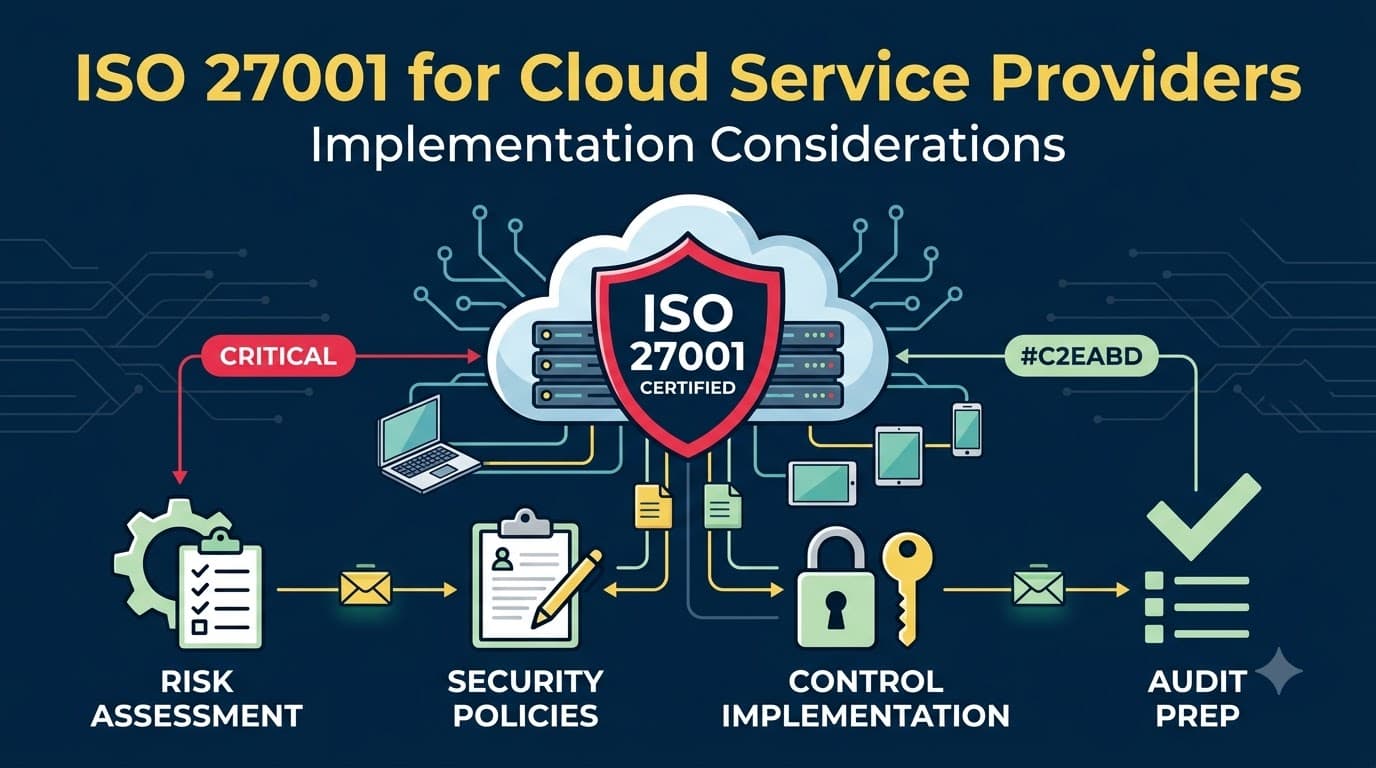
Priya Chandrasekaran found out her platform had a multi-tenancy problem the same way most CISOs eventually do: from a customer, on a Tuesday, in an email with "URGENT — POSSIBLE DATA EXPOSURE" in the subject line.
Priya was VP of Security at Parallax Cloud, a 340-person infrastructure-as-a-service provider that hosted compute, storage, and managed database workloads for roughly 900 mid-market and enterprise customers. A routine snapshot-restore job in Parallax's control plane had a race condition: for a window of about forty minutes, a volume-mount operation for one tenant's restore request had, in a small number of cases, attached to storage still tagged with a previous tenant's identifier. No data had left Parallax's network. No customer had actually opened another customer's files. But the engineering post-mortem was unambiguous — the isolation boundary between tenants, the thing Parallax's entire sales pitch rested on, had a bug in it, and the bug had been live for eleven weeks before anyone noticed.
The technical fix took four days. The commercial fallout took four months. Parallax's largest customer, a regional bank running its core-banking sandbox environment on the platform, invoked a security-incident clause in its contract and paused a renewal worth $1.8 million a year while its own risk committee decided whether to stay. Word travelled through the tight-knit community of enterprise security reviewers faster than Priya expected — three prospects in active procurement, representing roughly $6.4 million in pipeline, quietly went silent. When Priya's sales team pushed for status, one prospect's CISO was blunt: "Send us your ISO 27001 certificate and your Statement of Applicability, and we'll talk about a security review. Without them, this deal doesn't move, incident or no incident."
Parallax didn't have one. It had a security whitepaper, a SOC 2 Type I report that was eleven months stale, and a pile of internal runbooks nobody outside the platform team had ever read. Priya had audited enough vendors in a prior life to know what enterprise buyers actually wanted from a cloud provider: not a promise, but a certificate issued by an accredited body, backed by a document — the SoA — that named the exact controls in play, and a management system an independent auditor had tested against evidence, not marketing copy.
This article is about that gap, and about what changes when you sit on the provider side of the cloud relationship instead of the consumer side. Most ISO 27001 guidance is written from the customer's chair: "here's how to evaluate a cloud vendor," "here's the due-diligence checklist," "here's the clause to put in your contract." If you are the vendor — the IaaS, PaaS, or SaaS provider — the calculus is different. You own more of the shared-responsibility model than your customers usually realize. Your isolation architecture, not just your policies, is in scope for audit. And two extension standards that customer-side guides mention in passing — ISO/IEC 27017 and ISO/IEC 27018 — become central to how you prove yourself to the enterprise buyers who fund your growth.
Who this is for, and what you'll walk away with
This is written for security leaders, platform engineers, and GRC owners at cloud service providers — IaaS, PaaS, or SaaS, any scale from Series B startup to established platform business — who are scoping or running an ISO 27001 program specifically for the provider side of the business. You'll get a practical breakdown of what you own versus what your customers own under shared responsibility, a control-by-control mapping of the Annex A controls that carry the most weight in cloud environments, a clear-eyed look at what ISO/IEC 27017 and 27018 actually add (and don't), and the customer-assurance mechanics — certificates, SoA sharing, security questionnaires — that make or break enterprise sales cycles. If you're building a cloud ISMS from scratch or fixing one that's stalling in procurement reviews, this is the operational view. If your business is purely SaaS without an IaaS or PaaS layer underneath it, our companion guide on ISO 27001 for SaaS companies digs into considerations specific to that model; this article focuses on the provider-side considerations that apply across IaaS, PaaS, and SaaS alike. Unfamiliar with a term along the way — tenant, ISMS, Statement of Applicability? Our ISO 27001 glossary of terms is a quick reference.
Why cloud providers pursue ISO 27001
Cloud providers don't pursue ISO 27001 out of civic virtue. They pursue it because, past a certain deal size, enterprise procurement teams have stopped accepting anything less as evidence of a functioning security program. A whitepaper is marketing. A questionnaire response is self-attestation. A certificate issued by an accredited, independent certification body — backed by a Statement of Applicability an auditor has actually tested — is different in kind, not just in polish.
There's a second driver that matters just as much: internal discipline. Cloud platforms grow fast, and fast growth is exactly the condition under which access sprawls, configuration drifts, and "we'll document it later" becomes permanent. An ISMS built around Clause 6 planning and risk assessment forces a provider to formally register the risks that come with running someone else's workloads on shared infrastructure — the kind of risk that's easy to talk about informally in a platform team's Slack channel and easy to forget when a roadmap deadline is looming.
A third driver is table stakes across cloud RFPs generally. Once one competitor in a category holds ISO 27001, procurement teams start asking why others don't, even in verticals — logistics SaaS, dev-tools PaaS — where security certification wasn't historically a gating requirement. Cloud and hosting providers are, in fact, one of the industry categories that consistently show up in broader analyses of who needs ISO 27001 in the first place, alongside regulated sectors like finance and healthcare.
Buyer Trust Signal | What It Actually Tells an Enterprise Reviewer | Weight in Typical Cloud RFP |
|---|---|---|
ISO 27001 certificate + current SoA | Independent, accredited audit confirms a functioning ISMS and named controls | High — often a hard gate for regulated-industry buyers |
SOC 2 Type II report | US-centric attestation of controls operating effectively over a period (commonly 6–12 months) | High, especially for US enterprise and fintech buyers |
Security whitepaper / self-attestation | Vendor's own description of its controls, unverified by a third party | Low — accepted only for small deals or early-stage vendors |
Penetration test summary | Point-in-time technical assurance, narrower scope than a management-system audit | Medium — usually requested as a supplement, not a substitute |
CSA STAR registry entry | Cloud-specific self-assessment or third-party attestation against the Cloud Controls Matrix | Medium — valued by buyers already using the CSA framework |
Signed DPA / subprocessor list | Confirms contractual and legal privacy posture | High for buyers subject to GDPR or similar regimes, but privacy-specific, not a substitute for the ISMS |
The provider side of shared responsibility
Every cloud security conversation eventually draws the same triangle: a line splitting "what the provider secures" from "what the customer secures," sliding depending on whether you're selling infrastructure, a platform, or finished software. Most of the guidance built around that triangle is written for the customer — how to figure out what you still owe once you've handed infrastructure to a vendor. Sitting on the provider side inverts the exercise. You're not asking what you can hand off. You're asking what you can no longer avoid owning, because your customer is relying on you to own it and your contract says so.
The further down the stack you sell — IaaS versus PaaS versus SaaS — the more of that triangle sits on your side of the line. An IaaS provider still leaves guest-OS patching, application security, and data classification to the customer. A SaaS provider owns nearly everything except the customer's own user administration and the judgment calls about what data to put into the system in the first place. That expansion of ownership as you move up the stack is the single most important planning fact in this article, because it determines how much of Annex A actually applies to your product versus how much you can reasonably describe as "customer responsibility, contractually assigned" in your Statement of Applicability.
flowchart TB
    subgraph IaaS["IaaS — Provider-Owned"]
        A1[Physical facilities & hardware]
        A2[Virtualization / hypervisor]
        A3[Host OS & network fabric]
    end
    subgraph IaaSC["IaaS — Customer-Owned"]
        A4[Guest OS patching]
        A5[Application & middleware]
        A6[Data classification & access control]
    end
    subgraph PaaS["PaaS — Provider-Owned"]
        B1[Physical facilities & hardware]
        B2[Virtualization & host OS]
        B3[Runtime, middleware, managed services]
    end
    subgraph PaaSC["PaaS — Customer-Owned"]
        B4[Application code]
        B5[Data & identity configuration]
    end
    subgraph SaaS["SaaS — Provider-Owned"]
        C1[Physical facilities & hardware]
        C2[Virtualization, OS, runtime]
        C3[Application code & configuration]
        C4[Multi-tenant isolation controls]
    end
    subgraph SaaSC["SaaS — Customer-Owned"]
        C5[User access administration]
        C6[Data classification & usage]
    end
The mistake I see most often — across roughly a third of the cloud providers I've advised on ISO 27001 — is treating the shared-responsibility split as a marketing diagram rather than a control-ownership document. The diagram belongs in your sales deck. The underlying ownership decisions belong in your risk register and your Statement of Applicability, control by control, with a named owner inside your company for every line that says "provider."
Layer | IaaS Provider Owns | PaaS Provider Owns | SaaS Provider Owns | Customer Always Owns |
|---|---|---|---|---|
Physical facilities, hardware, power | Yes | Yes | Yes | — |
Hypervisor / virtualization layer | Yes | Yes | Yes | — |
Host OS and network fabric | Yes | Yes | Yes | — |
Guest OS patching | No (customer's) | Usually N/A (managed) | Yes | Depends on IaaS/PaaS split |
Runtime, middleware, managed services | No | Yes | Yes | — |
Application code | No | No | Yes | Customer's own app code on IaaS/PaaS |
Multi-tenant isolation logic | Partial (compute/storage) | Yes | Yes | — |
Identity & access configuration | Shared | Shared | Shared | Customer configures within provider's model |
Data classification & handling decisions | No | No | No | Always the customer |
Contractual & regulatory obligations for the platform itself | Yes | Yes | Yes | Customer separately for its own regulatory posture |
One nuance worth flagging early, because it trips up a lot of providers building their first SoA: shared responsibility is a contractual and architectural concept, not an Annex A control. It doesn't replace the analysis you do against supplier relationship security controls 5.19–5.23 or against Annex A control 5.23, information security for use of cloud services — it sits alongside that analysis. Control 5.23 is written primarily from the customer's perspective (an organization using cloud services), but a provider's own ISMS still has to account for it wherever the provider itself consumes cloud services from an upstream vendor — for example, an IaaS reseller running on top of a hyperscaler, or a SaaS company built entirely on a public cloud platform.
"Enterprise security reviewers don't want to hear about our controls anymore — they want the certificate number and the Statement of Applicability. Getting ISO 27001 turned an eight-week security review into an eight-day one." — Priya Chandrasekaran, VP of Security, Parallax Cloud
Multi-tenancy and isolation: the control an auditor will actually test
If shared responsibility is the conceptual frame, multi-tenancy isolation is where a cloud-provider ISMS earns or loses credibility. Every enterprise buyer's underlying fear is the same one Parallax lived through: that their data, workloads, or credentials will bleed across the boundary into another customer's environment. An ISO 27001 auditor assessing a cloud provider will spend disproportionate time here, because it's the risk that's specific to being a multi-tenant platform rather than a generic IT organization.
Isolation isn't one control — it's an architectural property that several Annex A controls converge on. Segregation of networks under controls 8.20–8.23 covers the network-layer separation between tenants (VPCs, VLANs, security groups, software-defined perimeters). Access control and identity management (5.15–5.18) cover who inside your own organization can cross tenant boundaries and under what approval. Cryptography and key management (8.24) cover whether tenant data is encrypted with tenant-specific keys or a shared platform key — a distinction that matters enormously to an auditor and, frankly, to your own blast-radius math if a key is ever compromised. And logging and monitoring (8.15–8.16) cover whether you'd actually detect a cross-tenant access event in real time rather than in a post-mortem four days after a customer emails you.
The practical failure mode I see most often isn't a missing control — it's a control that exists at the design level but was never tested against the specific scenario of tenant boundary crossing. Teams run vulnerability scans and penetration tests against external attack surface, and forget to specifically red-team the question "can Tenant A's credentials, API calls, or restore jobs ever touch Tenant B's data plane?" That's the exact scenario that took down Parallax's biggest renewal.
Isolation Mechanism | What It Prevents | Primary Annex A Control(s) | Typical Audit Evidence |
|---|---|---|---|
Per-tenant network segmentation (VPC/VLAN/security groups) | Lateral movement between tenant workloads | Network security & segregation of networks (8.20–8.22) | Network architecture diagrams, firewall/security-group rule exports, segmentation test results |
Tenant-scoped IAM roles and API authorization | Cross-tenant API or console access | Access control, identity management, access rights (5.15–5.18), privileged access rights (8.2) | IAM policy reviews, access review logs, least-privilege attestations |
Per-tenant or per-customer encryption keys | Blast radius if a key is compromised | Use of cryptography (8.24) | Key management architecture, key rotation logs, HSM/KMS configuration |
Control-plane change management for shared infrastructure | Config or code changes that weaken isolation | Change management (8.32), configuration management (8.9) | Change tickets, peer-review records, rollback procedures |
Continuous logging of cross-tenant boundary events | Undetected isolation failures | Logging and monitoring activities (8.15–8.16) | SIEM alert rules specific to tenant-boundary anomalies, incident tickets |
Isolation-specific testing (not just generic pen testing) | Isolation bugs that generic scans miss | Technical vulnerability management (8.8), security testing in development (8.29) | Scoped test plans naming tenant-isolation as an explicit objective, retest evidence |
Data segregation in shared storage/database systems | Data commingling in multi-tenant data stores | Information access restriction (8.3), data masking (8.11) where applicable | Data model documentation, row-level security configuration, access-restriction test results |
The auditors I've worked alongside on cloud-provider certifications almost always ask for a walkthrough of at least one isolation control end-to-end — show me the architecture diagram, show me the test that proves it, show me the ticket where you last found and fixed a gap. That last part matters: a provider that can produce evidence of having found and fixed an isolation weakness through its own testing looks more credible than one that claims a flawless record, because flawless records in multi-tenant platforms are, in my experience, close to nonexistent.
"The hardest part of the whole project wasn't the paperwork. It was proving, control by control, that Tenant A truly could never touch Tenant B's data — and doing it in a way an auditor who'd never read our source code could still verify." — Tomas Vireskog, VP of Platform Engineering, Ferrolyte Systems
Cloud-relevant Annex A controls: a working map
Nothing in Annex A is exclusively "for cloud providers" — the control set is generic by design, and that's deliberate; it's what lets the same standard certify a law firm and a hyperscale platform. But in fifteen-plus years of running gap analyses, a specific subset of the 93 controls carries outsized weight for any organization whose product is the infrastructure, platform, or software someone else's business depends on. The table below is the one I hand cloud-provider clients in week one of scoping, because it tells them where the bulk of their evidence-gathering effort will actually go.
Control(s) | Name | Why It Carries Extra Weight for a Cloud Provider |
|---|---|---|
5.19–5.22 | Supplier relationship security, agreements, ICT supply chain, monitoring supplier services | Applies both to your own upstream vendors (e.g., a hyperscaler you build on) and shapes what you must offer downstream customers in your own agreements |
5.23 | Information security for use of cloud services | Applies to your organization wherever it consumes cloud services itself; also the control enterprise customers will ask how you address as their supplier |
5.34 | Privacy and protection of PII | Central wherever the platform processes customer or end-user personal data — the bridge into ISO/IEC 27018 |
8.3 | Information access restriction | Core mechanism for enforcing tenant-level data boundaries |
8.6 | Capacity management | Multi-tenant platforms fail loudly when noisy-neighbor resource contention isn't managed; capacity planning is a security control, not just an ops one |
8.9 | Configuration management | Drift in shared infrastructure configuration is one of the fastest ways to weaken isolation without anyone noticing |
8.11 | Data masking | Relevant for shared analytics, support tooling, or staging environments that touch multi-tenant data |
8.14 | Redundancy of information processing facilities | Enterprise customers expect resilience commitments backed by architecture, not just an SLA number |
8.15–8.16 | Logging, monitoring activities | Detection of cross-tenant anomalies and the audit trail customers themselves may contractually require access to |
8.20–8.23 | Networks security, security of network services, segregation of networks, web filtering | The technical backbone of tenant isolation at the network layer |
8.24 | Use of cryptography | Encryption at rest/in transit, key management model, and whether keys are tenant-specific |
8.25–8.29 | Secure development life cycle, application security requirements, secure architecture, secure coding, security testing | The platform itself is the product — vulnerabilities here are customer-facing incidents, not just internal risk |
8.31 | Separation of development, test, and production environments | Especially important where test/staging environments might otherwise touch real multi-tenant data |
8.32 | Change management | Change control over shared infrastructure that many customers depend on simultaneously |
8.34 | Protection of information systems during audit testing | Governs how the provider allows (or restricts) customer-initiated penetration testing against a shared platform |
A note on precision, because it's a distinction I see conflated constantly: Annex A control 5.1, "Policies for information security," is not the same thing as management-system Clause 5, "Leadership." Clause 5 is a requirement on top management's commitment and accountability under the ISMS itself; control 5.1 is an Annex A control about the existence and maintenance of security policy documents. Both matter for a cloud provider — a certification body will test top management's genuine involvement in cloud-specific risk decisions under Clause 5, separately from whether a written cloud security policy exists under control 5.1 — but they are not interchangeable, and conflating them is a common documentation mistake I still see in mature engineering organizations that assume "we have a policy" satisfies "leadership is accountable."
ISO/IEC 27017 and ISO/IEC 27018: what the extensions actually add
This is the part of cloud ISO 27001 programs that gets misunderstood most often, so I want to be precise about it. ISO/IEC 27017 and ISO/IEC 27018 are not standalone certifiable management-system standards. ISO/IEC 27001 is the certifiable ISMS standard — the one an accredited certification body audits and issues a certificate against. 27017 and 27018 are extension guidance documents that build on ISO/IEC 27002 (the implementation-guidance companion to 27001's Annex A): 27017 adds cloud-specific implementation guidance and a small number of additional controls oriented at both cloud service providers and cloud service customers, and 27018 adds guidance specifically for organizations acting as PII processors in public cloud environments.
In practice, what that means for a cloud provider is this: you don't pursue "27017 certification" or "27018 certification" as separate schemes. You pursue ISO 27001 certification, and you extend your ISMS to also address the additional guidance in 27017 and, where you process customer PII, 27018. Most accredited certification bodies will assess conformity to that extended guidance as part of your ISO 27001 audit and reference it on your certificate or in an accompanying statement — commonly described in the market as "ISO 27001 certification with 27017/27018 extension" — but there is no independent 27017 or 27018 certificate that exists on its own, outside of an underlying ISO 27001 ISMS. Be skeptical of any framing, from a consultant or a certification body's marketing, that suggests otherwise.
Why bother, if it's not a separate certificate? Because enterprise security teams — particularly at banks, insurers, and any buyer doing business in the EU — increasingly ask cloud vendors directly whether they've addressed 27017 and 27018, and a provider that can answer "yes, our ISMS incorporates both" clears a specific line item on procurement checklists that a bare ISO 27001 certificate doesn't automatically clear.
Standard | What It Adds Beyond ISO 27001/27002 | Who It's Aimed At | Certifiable On Its Own? |
|---|---|---|---|
ISO/IEC 27017 | Cloud-specific implementation guidance for existing Annex A controls, plus additional guidance covering shared roles/responsibilities, virtual machine hardening, and cloud-specific configuration and monitoring practices | Both cloud service providers and cloud service customers | No — extension to an ISO 27001 ISMS, assessed as part of that audit |
ISO/IEC 27018 | Guidance for protecting personally identifiable information (PII) processed by public cloud providers acting as PII processors — consent, purpose limitation, sub-processor transparency, PII return/deletion at contract end | Public cloud providers processing customer/end-user PII on behalf of another controller | No — extension to an ISO 27001 ISMS, assessed as part of that audit |
For providers processing PII at scale in a multi-tenant SaaS product, 27018 in particular tends to surface real gaps — not because the guidance is exotic, but because "who is the controller and who is the processor for this specific data flow" is a question SaaS platforms answer inconsistently across product teams until someone is forced to document it control by control. That documentation exercise connects directly to Annex A control 5.34, privacy and protection of PII, and to the broader privacy program most SaaS providers already run for GDPR purposes — but 27018 asks for it in the specific vocabulary and structure an ISO auditor will recognize.
"PII in a multi-tenant SaaS platform is a different animal than PII in a single-tenant app. Working through 27018 forced us to document exactly where every processor obligation lived — and half of them weren't where we assumed." — Devon Okafor-Lindqvist, Data Protection Lead, Solantis Cloud
If your team wants a deeper, control-by-control walkthrough of 27017 and 27018 requirements, that's a natural companion piece to this one — worth requesting from your content team as a dedicated deep-dive rather than trying to fully absorb it here.
Customer assurance: certificates, SoA sharing, and questionnaires
Certification is only half the job. The other half is packaging what you've built so an enterprise security reviewer can actually consume it inside a procurement timeline that's usually measured in weeks, not months. I've watched providers earn a perfectly good ISO 27001 certificate and then still lose deals because their sales and security teams had no repeatable process for handing the right assurance artifact to the right reviewer at the right stage.
The certificate itself is the easiest artifact to share — it's a public-facing document with no sensitive content, and it should sit on your website's trust page without gatekeeping. The Statement of Applicability is where judgment is required: sharing the full SoA under NDA with serious prospects, once they've cleared an early qualification stage, tends to shorten review cycles dramatically, because it lets a security reviewer see exactly which of the 93 controls you've implemented and why any exclusions were justified, rather than guessing from the certificate alone. If you haven't built or refreshed yours recently, our Statement of Applicability (SoA) Template is a reasonable starting structure to adapt to a multi-tenant platform's control set.
Security questionnaires deserve their own operating model. Every enterprise buyer's procurement team runs some variant of a vendor security questionnaire — sometimes a bespoke spreadsheet, sometimes a standardized instrument like the CSA's Consensus Assessments Initiative Questionnaire (CAIQ). A cloud provider that maintains a living answer library mapped to its SoA and control evidence can turn a two-week questionnaire cycle into a two-day one; a provider answering from scratch each time burns weeks of security-team time on repetitive work that a template already solved.
Assurance Artifact | Audience | Sharing Model | What It Proves |
|---|---|---|---|
ISO 27001 certificate | Public / all prospects | Publish openly | An accredited body confirmed a functioning ISMS exists |
Statement of Applicability | Qualified prospects, under NDA | Share on request past early qualification | Exactly which controls apply, and why any are excluded |
Internal/external audit summary | Serious late-stage prospects, under NDA | Share selectively, often redacted | Depth and rigor of ongoing control testing |
Penetration test executive summary | Serious late-stage prospects, under NDA | Share selectively | Independent technical validation, narrower scope than the ISMS |
CAIQ / CSA STAR response | Prospects using CSA-aligned review processes | Publish to CSA STAR registry or share directly | Standardized cloud-specific control self-assessment |
Security questionnaire answer library | Sales engineering / security team, internal | Maintain centrally, reuse across deals | Consistency and speed in procurement responses |
Subprocessor list & DPA | Prospects with GDPR or similar obligations | Publish or share on request | Transparency on data flows and legal accountability |
One operational habit worth building early: assign an internal owner — usually someone straddling security and sales engineering — who is accountable for keeping every one of those artifacts current. Nothing damages a provider's credibility with a sophisticated enterprise buyer faster than handing over an SoA that's visibly a year stale, or a pen test summary referencing an architecture the platform team retired two quarters ago.
"Our sales engineers now open enterprise security calls with the Statement of Applicability, not a slide deck. It changes the whole tone of the conversation." — Marcus Feldheim, Head of Enterprise Sales, Kestrion Cloud
Scoping a cloud ISMS
Scope decisions make or break cloud-provider ISMS timelines more than any other single choice, and I say that having watched providers both nail it and badly mishandle it. The instinct at a lot of platform companies is to scope the ISMS around "the whole company," which sounds thorough and instead produces an audit surface so broad that Stage 1 turns into a six-month archaeology project across product lines, regions, and acquired codebases that have nothing to do with the actual cloud service customers are buying.
The better starting question, laid out in more general terms in our guide to defining the scope of your ISMS, becomes sharper for a cloud provider: which product, which regions' infrastructure, which supporting business functions (engineering, security, customer support with data access, and typically not unrelated internal-only tooling) actually touch customer workloads or data, and are those the boundaries you want an auditor testing and a certificate representing to the market?
Scope Decision | Common Options | Trade-off |
|---|---|---|
Product line coverage | Single flagship product vs. entire portfolio | Broader scope reassures buyers of every product but multiplies audit time and evidence collection |
Regional/data-center coverage | All regions vs. core regions serving the majority of enterprise customers | Narrower regional scope is faster to certify but must be disclosed clearly — buyers in excluded regions will ask |
Subprocessor and subsidiary inclusion | Include vs. carve out via contractual assurance | Excluding a subprocessor from scope requires documenting how its risk is otherwise managed (5.19–5.22) |
Supporting functions (support, sales engineering with data access) | Include if they can access customer data; exclude if fully segregated | Excluding a function that actually has access privileges is a common Stage 1 finding |
Internal tooling and corporate IT | Usually excluded unless directly touching the production platform | Keeps scope focused on the product customers actually buy |
The rule of thumb I give clients: your ISMS scope statement should map cleanly to the thing your sales team points at when they say "this is what's certified." If a prospect asks "does this cover the product I'm buying, in the region I need it in," the honest answer should be yes without a paragraph of caveats. Scope creep in the other direction — scoping too narrowly to make certification easy, then letting sales imply broader coverage than the certificate actually states — is a credibility risk that sophisticated buyers will eventually catch, usually during a renewal review, at the worst possible moment.
Common cloud-provider mistakes
The mistakes I see repeatedly across cloud-provider ISMS projects cluster into a handful of predictable categories — architectural assumptions treated as evidence, generic controls applied without cloud-specific nuance, and assurance artifacts that lag reality. Almost none of them are exotic. What makes them costly is that they surface late — during Stage 1, or worse, during a customer's own security review — rather than during an honest internal gap analysis six months earlier when they'd have been cheap to fix.
The pattern I'd flag most strongly for a first-time cloud-provider ISMS owner: these mistakes rarely show up in isolation. A provider that scoped too broadly usually also has stale assurance artifacts, because the team is stretched thin managing an audit surface larger than it needs to be. A provider assuming its hyperscaler's certification covers its own product usually also has a thin supplier-relationship analysis under controls 5.19–5.23, because nobody has actually sat down and mapped exactly which layer of the stack each certificate covers. Fixing the root scoping and ownership decisions early tends to resolve two or three of these at once.
Mistake | Consequence | Fix |
|---|---|---|
Treating the shared-responsibility diagram as evidence rather than a starting point for control ownership | Auditor finds no documented control owner for provider-side responsibilities | Assign named owners for every "provider" line in the diagram, tracked in the risk register |
Scoping the whole company instead of the cloud product and its supporting functions | Stage 1 audit balloons into unrelated business units, timelines slip by months | Scope tightly around what customers actually buy, per the scoping table above |
Generic penetration testing without an explicit tenant-isolation test objective | Isolation bugs surface in production instead of testing | Write tenant-boundary-crossing scenarios explicitly into test plans (control 8.29) |
No tenant-specific encryption key strategy | A single key compromise exposes every tenant, not one | Adopt per-tenant or per-customer keys where architecture allows (control 8.24) |
Stale SoA or pen test summaries handed to prospects | Sophisticated buyers lose confidence and escalate to legal/security escalation | Assign an owner accountable for keeping assurance artifacts current |
Assuming a hyperscaler's own certifications cover the provider's product | Auditor finds the provider hasn't assessed its own layer of the stack | Document explicitly what the upstream provider's certification covers vs. what your organization must separately assure (5.19–5.23) |
No plan for customer-initiated penetration testing requests | Enterprise customers who want to test their own tenant get blocked or handled ad hoc | Define a documented process and boundaries under control 8.34 |
Confusing ISO 27017/27018 conformity with a standalone certificate | Marketing claims ISO auditors won't support, risking a nonconformity or reputational correction | Frame both correctly as extensions assessed within the ISO 27001 audit |
Case study: Parallax Cloud closes the gap it almost lost a bank over
Returning to Priya Chandrasekaran's platform: Parallax scoped its ISMS around its core IaaS product and the three regions housing roughly 85% of enterprise customer workloads, deliberately excluding two smaller legacy regions slated for retirement. The gap analysis surfaced exactly what you'd expect from a fast-growing infrastructure company — strong technical controls, thin documentation, and no clear owner for several of the provider-side responsibilities in its own shared-responsibility model. The isolation incident became, uncomfortably, the best forcing function the security team had ever had: it turned a scattered case for ISO 27001 into a board-level mandate with budget attached.
Parallax's certification project ran eleven months from kickoff to Stage 2 pass, at a first-year cost of roughly $210,000 including consulting support, tooling, and the certification body's audit fees. The bank that had paused its renewal came back to the table once Parallax could produce a certificate and a full SoA under NDA; the account renewed at $1.9 million, slightly above its prior value, with an explicit security-review clause tied to Parallax maintaining certification. Within two quarters of certification, roughly $4.1 million of the previously stalled $6.4 million pipeline closed, with the remainder lost to unrelated timing and budget factors rather than security concerns.
Case study: Haldrix Cloud and the 27018 gap nobody had documented
Haldrix Cloud, a SaaS analytics platform processing behavioral data for roughly 200 mid-market customers, pursued ISO 27001 with the 27017 and 27018 extensions specifically because two prospective European bank customers required both as a condition of any contract discussion. During the gap analysis, Haldrix's security team discovered that its support team's data-access tooling — used for troubleshooting customer issues — had broader access to raw customer PII than any documented policy justified, a gap that had existed for over two years without triggering an incident, but that would have been a clear nonconformity under 27018's purpose-limitation guidance.
Fixing it meant rebuilding the support tool's access model around scoped, time-limited, logged access rather than standing broad access — a six-week engineering effort that delayed the certification timeline by about a month but closed a real risk. Haldrix certified within nine months of starting, closed the $1.2 million European bank contract it had been chasing, and cut its average security-questionnaire response time from nineteen days to three by publishing a maintained SoA and CAIQ response alongside the certificate.
"We used to treat 27017 as a checkbox extension. Once we mapped it against our actual control plane, we found gaps our own engineers had flagged eighteen months earlier that nobody had ever closed." — Adaeze Okonjo-Bright, Director of Security Compliance, Haldrix Cloud
Case study: Ferrolyte Systems learns the scoping lesson the hard way
Ferrolyte Systems, a PaaS provider offering managed database and messaging services, scoped its first ISO 27001 attempt around its entire company — every product line, every internal tool, every regional office — on the theory that broader was safer. Sixteen months and roughly $340,000 into the project, Ferrolyte failed Stage 1: the auditor found the scope statement didn't match the risk assessment, several in-scope internal tools had no meaningful security ownership, and the core platform controls that actually mattered to customers were buried under unrelated documentation.
Ferrolyte's leadership rescoped around the managed database and messaging platform specifically, explicitly excluding unrelated internal tooling and a recently acquired product still on separate infrastructure. The second attempt took five months and passed Stage 2 cleanly. The lesson Ferrolyte's VP of Platform Engineering now shares openly with other founders: scope for what your customers are buying and can verify, not for what looks most comprehensive on paper.
Case Study | Timeline | First-Year Cost | Quantified Outcome |
|---|---|---|---|
Parallax Cloud | 11 months | ~$210,000 | Recovered $1.9M renewal; $4.1M of stalled pipeline closed within two quarters |
Haldrix Cloud | 9 months | ~$180,000 | Closed $1.2M European contract; questionnaire response time cut from 19 to 3 days |
Ferrolyte Systems | 16 months (failed Stage 1) then 5 months (rescoped, passed) | ~$340,000 (first attempt) + ~$95,000 (second attempt) | Certified on rescoped platform after correcting scope-to-risk mismatch |
Cryptography and key management for multi-tenant platforms
Use of cryptography, control 8.24, sits at the center of a cloud provider's isolation story in a way that's easy to underweight during scoping. The architectural decision that matters most — and the one auditors ask about first — is whether encryption keys are tenant-specific or shared across the platform. A shared platform key is operationally simpler and cheaper to manage, but it means a single key compromise, or a single bug in key-handling logic, exposes every tenant simultaneously. Per-tenant or per-customer keys, managed through a dedicated key management service or customer-managed key (CMK) option, contain the blast radius of a compromise to a single customer and let you make a much stronger contractual promise to enterprise buyers who specifically ask about it.
Key rotation and lifecycle management deserve equal attention. I've reviewed cloud providers with excellent encryption-at-rest coverage undermined by keys that hadn't rotated in years, or key-access logs that existed but were never reviewed. An auditor testing control 8.24 will want to see rotation schedules actually followed, access to key-management systems restricted under privileged access rights (control 8.2), and — increasingly, as customers ask for it directly — the option for enterprise customers to bring or manage their own keys.
Key Management Model | Isolation Strength | Operational Complexity | Typical Buyer Expectation |
|---|---|---|---|
Single shared platform key | Weakest — one compromise affects all tenants | Lowest | Acceptable only for lower-tier/self-serve customers |
Per-tenant keys, provider-managed | Strong — compromise contained to one tenant | Moderate | Standard expectation for enterprise SaaS |
Customer-managed keys (CMK/BYOK) | Strongest — customer controls revocation independently | Highest | Frequently required by regulated-industry buyers (banking, healthcare, government) |
Hardware security module (HSM)-backed key storage | Adds tamper-resistance regardless of model above | Higher cost, often needed at enterprise scale | Expected by the most security-mature buyers |
Capacity management as a security control, not just an ops metric
Control 8.6, capacity management, gets filed under "infrastructure operations" at most non-cloud organizations and largely ignored by security teams. For a cloud provider, that's a mistake, because capacity contention in a multi-tenant environment is a security-relevant risk with a name every platform engineer already knows: the noisy-neighbor problem. When one tenant's workload consumes disproportionate shared compute, storage I/O, or network throughput, other tenants experience degraded performance or, in severe cases, service unavailability — and from the affected customer's perspective, that's indistinguishable from an availability incident regardless of whether "security" or "operations" owned the root cause.
I ask cloud-provider clients to treat capacity management as a joint security-and-operations control precisely because the failure mode threatens the confidentiality-integrity-availability triad's availability leg in a way that's specific to shared infrastructure. A single-tenant application doesn't have this problem; a multi-tenant platform does, by definition, every day. Auditors increasingly probe for it — expect questions about resource quotas per tenant, throttling and rate-limiting mechanisms, and monitoring thresholds that trigger before contention becomes customer-visible, tying back into the redundancy planning covered under control 8.14.
Working with auditors: preparing cloud-specific evidence
A first-time cloud-provider ISMS owner often assumes an ISO 27001 auditor will focus mainly on policy documents and interview transcripts. For a cloud provider specifically, expect a heavier emphasis on technical evidence: architecture diagrams that actually match production, exported IAM policies rather than a policy document describing intended IAM policies, and — increasingly — a live or recorded walkthrough of a tenant-isolation control rather than a slide describing it. The auditors I've worked with on cloud-provider certifications consistently name multi-tenancy evidence, encryption key architecture, and change-management records for the control plane as the three areas where they spend disproportionate time relative to a generic organization's audit.
The preparation habit that saves the most time during Stage 2 is maintaining an evidence library continuously rather than assembling it in the weeks before the audit. Screenshot-based evidence ages badly and looks assembled-for-the-auditor; systems that can export current configuration, current access-review records, and current test results on demand hold up far better under sampling, and they're the same systems that make your ongoing internal audits and surveillance audits easier once you're certified.
Evidence Type | What the Auditor Is Testing | How to Keep It Audit-Ready |
|---|---|---|
Architecture diagrams | Whether documented isolation matches deployed reality | Update diagrams as part of the change-management process, not as a pre-audit scramble |
IAM/access exports | Least privilege and tenant-boundary enforcement in practice | Automate periodic exports rather than manually assembling before an audit |
Key management records | Rotation cadence, access restriction, per-tenant vs shared model | Log rotation events and key-access requests continuously |
Isolation test results | Whether tenant-boundary-crossing scenarios were actually tested, not just generic scans | Run and log isolation-specific tests on a recurring schedule, not once before certification |
Change-management tickets for the control plane | Whether changes to shared infrastructure go through review | Enforce ticket-linked deployment for any change touching multi-tenant systems |
Logging, monitoring, and incident response in a multi-tenant environment
Logging and monitoring activities, controls 8.15–8.16, do double duty for a cloud provider: they're the mechanism you use to detect your own security incidents, and increasingly they're a contractual deliverable customers expect access to for their own compliance programs. The Parallax incident that opened this article was ultimately caught by a customer, not by Parallax's own monitoring — a gap that, in my experience, is more common than providers like to admit, and exactly the kind of finding a certification auditor will probe for directly.
A mature cloud-provider logging program distinguishes between three log audiences with different needs: internal security operations (broad visibility across the whole platform, tuned for anomaly detection), customer-facing audit logs (scoped strictly to that customer's own tenant, often exposed through an API or dashboard), and compliance evidence (retained per your documented retention policy and available for the auditor's sampling during Stage 2 and surveillance audits). Conflating these — for instance, exposing internal security tooling directly to customers, or failing to separate one tenant's audit log from another's — creates both a security risk and, ironically, an isolation failure inside the very control meant to detect isolation failures.
Log Audience | Purpose | Isolation Requirement |
|---|---|---|
Internal security operations / SIEM | Cross-platform anomaly detection, incident response | Broad internal visibility, tightly access-controlled itself |
Customer-facing audit logs | Customer's own compliance and internal security needs | Strictly scoped to that tenant only — cross-tenant leakage here is itself a finding |
Compliance evidence retention | Auditor sampling, incident forensics, regulatory retention obligations | Retained per documented policy, access-restricted, tamper-evident |
Incident management for a multi-tenant platform also needs a documented decision path for when and how to notify affected customers — tied to your broader incident management program and its planning and preparation control — because "should we tell the customer" is not a judgment call you want engineers making live during an incident.
Secure development for the platform that is the product
For most organizations, secure development life cycle controls 8.25–8.29 protect internal business applications. For a cloud provider, they protect the actual product every customer is paying for — which raises the stakes on every one of these controls by an order of magnitude. A secure-coding gap in an internal HR tool is embarrassing. A secure-coding gap in the control plane that provisions customer infrastructure is a multi-tenant incident waiting to happen.
The practice I push hardest on with cloud-provider clients is control 8.31, separation of development, test, and production environments, specifically as it interacts with multi-tenancy: test and staging environments have a well-documented habit of quietly accumulating copies of real customer data, because it's the easiest way for an engineer to reproduce a bug. That's a direct path to a PII exposure or an isolation failure that has nothing to do with the production platform's actual security controls. Data masking (control 8.11) and strict environment separation close that gap, but only if enforced by tooling, not policy alone.
SDLC Control Area | Cloud-Specific Risk If Weak | Practical Reinforcement |
|---|---|---|
Application security requirements (8.26) | Multi-tenant features shipped without isolation requirements defined upfront | Require an isolation/security review as a named step in the feature design process |
Secure architecture & engineering principles (8.27) | Control-plane design decisions weaken tenant boundaries by default | Architecture review board includes isolation as an explicit checklist item |
Secure coding (8.28) | Common vulnerability classes (IDOR, broken object-level authorization) directly enable cross-tenant access | Static analysis and code review specifically targeting tenant-ID handling in every data-access path |
Security testing in development and acceptance (8.29) | Generic testing misses tenant-boundary-crossing scenarios | Isolation-specific test cases required before release, not just generic vulnerability scanning |
Separation of dev/test/prod (8.31) | Test environments accumulate real customer data | Enforced data masking and environment segregation, verified by tooling not policy |
Outsourced development (8.30) | Contractors touching the control plane without the same scrutiny as employees | Apply the same secure-coding and access controls to contracted engineers building on the platform |
Data residency, sovereignty, and subprocessor transparency
Enterprise buyers evaluating a cloud provider almost always ask two questions that sit outside the core Annex A control set but still need to live inside the ISMS: where physically does our data live, and who else touches it. Data residency commitments — this tenant's data stays in this region — are architectural and contractual promises that your ISMS needs to be able to verify are actually true, not just documented as intent. I've seen more than one provider promise regional residency in a contract while a backup or disaster-recovery process silently replicated data cross-region; that's exactly the kind of gap a thorough internal audit, done honestly, should catch before a customer or a regulator does.
Subprocessor transparency ties directly back to supplier relationship security controls 5.19–5.23: every upstream vendor that touches customer data on your behalf — a hyperscaler, a logging or observability vendor, a customer-support platform — is a subprocessor your own customers are entitled to know about, typically through a published subprocessor list tied to your data processing agreement. Maintaining that list accurately, and re-assessing each subprocessor's own security posture periodically, is both good practice and, for providers subject to GDPR obligations as a processor, effectively required.
Consideration | Provider Obligation | Common Failure Mode |
|---|---|---|
Data residency commitments | Verify architecturally, not just contractually, that data stays in the committed region | Backup/DR processes silently replicate cross-region |
Subprocessor list maintenance | Keep current, published or available on request, tied to the DPA | List goes stale as new vendors are added without updating documentation |
Subprocessor security assessment | Periodically reassess each subprocessor's own controls | One-time assessment at onboarding, never revisited |
Cross-border transfer mechanisms | Appropriate legal transfer mechanisms in place where required | Assumed covered by a hyperscaler's own compliance without independent verification |
Certification timeline and cost for cloud providers
Cloud-provider ISO 27001 projects tend to run somewhat longer and cost somewhat more than a comparably sized non-cloud business, mainly because of the additional evidence-gathering burden around multi-tenancy testing and the shared-responsibility documentation exercise. The figures below are illustrative ranges drawn from the pattern I've seen across cloud-provider engagements of varying size — treat them as planning inputs, not quotes.
Provider Size / Complexity | Typical Timeline | Illustrative First-Year Cost Range | Cost Drivers |
|---|---|---|---|
Early-stage IaaS/PaaS/SaaS (under 100 employees, single region) | 5–8 months | $60,000–$140,000 | Lean gap analysis, focused scope, limited legacy documentation debt |
Growth-stage cloud provider (100–500 employees, multi-region) | 8–14 months | $150,000–$300,000 | Multi-region evidence, isolation testing, larger consulting/audit scope |
Established platform (500+ employees, multiple product lines) | 12–20 months | $300,000–$600,000+ | Scope negotiation across product lines, legacy technical debt remediation, larger audit team |
These ranges assume a provider pursuing ISO 27001 with the 27017 and, where relevant, 27018 extensions as a single combined effort rather than sequential projects — which is both cheaper and more coherent than treating the extensions as an afterthought bolted on after initial certification. For a general grounding in what drives ISO 27001 cost regardless of industry, our companion piece on implementation costs is a useful baseline to layer this cloud-specific view on top of.
Continuous compliance: running ISO 27001 alongside SOC 2 and other frameworks
Very few cloud providers I work with pursue ISO 27001 in isolation from other frameworks — SOC 2 in particular has become close to a default expectation for cloud vendors selling into the US market, and PCI DSS enters the picture for any provider touching payment card data even indirectly. Rather than running these as separate, uncoordinated compliance projects, the providers who handle this best build one underlying control environment and map multiple frameworks onto it, using ISO 27001's Annex A and the SoA as the backbone and cross-referencing SOC 2's Trust Services Criteria, the PCI DSS requirements where applicable, and GDPR obligations against the same evidence base.
Framework Pairing | Relationship to ISO 27001 | Practical Approach |
|---|---|---|
SOC 2 (Type I/II) | Different attestation model (auditor opinion vs. certification), overlapping controls | Map Trust Services Criteria to your SoA; reuse evidence collection where controls overlap |
PCI DSS | Payment-card-specific, prescriptive technical requirements | Treat as an additional scope layer for systems touching cardholder data, not a replacement for the ISMS |
GDPR | Legal/regulatory obligation, not a certifiable standard | ISO 27001 (with 27018 where relevant) supports GDPR accountability but does not itself constitute legal compliance |
CSA STAR | Cloud-specific self-assessment or third-party attestation | Populate from the same control evidence base as your ISO 27001 SoA |
The operational payoff of this "one control environment, multiple mappings" approach is significant: audits become additive rather than duplicative, and your security team stops re-explaining the same control to three different auditors using three different vocabularies in the same quarter.
"Certification told our board we were secure. The gap analysis told us where we were lying to ourselves." — Renata Pruszkowski, COO, Vantage Compute
The strategic close: certification as a growth lever, not a cost center
I understand why ISO 27001 gets budgeted as a compliance cost at most cloud providers — it shows up as a line item next to legal fees and insurance premiums, and it's easy to treat it that way until a deal like Parallax's bank renewal makes the actual math visible. The providers who get the most value out of certification are the ones who stop treating it as a defensive expense and start treating it as a piece of go-to-market infrastructure: a certificate and a maintained SoA that shortens every enterprise sales cycle they touch, not just the ones where security almost killed the deal.
That reframe changes who owns the program. When ISO 27001 sits purely inside security or IT, it tends to stall at "necessary evil" and gets the minimum viable effort. When sales engineering, product, and the executive team treat the certificate and SoA as sales assets — the way Marcus Feldheim's team at Kestrion Cloud now opens enterprise calls with the SoA instead of a slide deck — the program gets resourced properly, gets maintained rather than left to decay after the audit, and starts paying for itself in shortened procurement cycles well before the next renewal audit comes around.
For a cloud provider specifically, that means building the muscle described throughout this article: owning your side of shared responsibility explicitly rather than gesturing at a diagram, testing tenant isolation as its own named risk rather than assuming generic security testing covers it, and treating the 27017/27018 extensions as a genuine differentiator with the buyers who ask for them rather than a checkbox nobody on your team fully understands. Do that well, and the next isolation incident — because in a multi-tenant platform, there eventually will be one — gets caught by your own monitoring, handled by a documented incident process, and disclosed to customers who already trust your certification enough to stay through it.
If you're scoping your first cloud-provider ISMS or trying to get a stalled one back on track, our Complete ISO 27001 Implementation Guide eBook walks through the end-to-end project, our ISO 27001 Gap Analysis Tool will show you where a cloud-specific gap assessment should start, and our Certification Readiness Checklist is a practical pre-audit gut check once you're close. Pair it with our Annex A — All 93 Controls at a Glance cheat sheet to keep the full control set in view while you work through the cloud-specific priorities this article covers, and our Statement of Applicability (SoA) Template to start building the document your enterprise buyers will actually ask to see.