The conference room fell silent. It was 2020, and I was presenting breach forensics findings to the board of a European financial services company. The CISO had his head in his hands. The CEO kept asking the same question: "How did they get in?"
The answer wasn't what anyone expected: through their HVAC contractor's remote access portal.
A vendor they'd trusted for 12 years. A vendor who had "good security." A vendor nobody had properly assessed because, well, they just managed the air conditioning. That breach cost them €4.3 million in direct costs and nearly destroyed their ISO 27001 certification.
After fifteen years in cybersecurity, I can tell you with absolute certainty: your security is only as strong as your weakest vendor. And in today's interconnected business ecosystem, that's a terrifying reality.
The Supply Chain Security Crisis Nobody Talks About
Let me share something that keeps security professionals awake at night: 61% of organizations have experienced a data breach caused by a third party or vendor (Ponemon Institute, 2023). Read that again. More than half.
But here's what really shocks people—the average organization has relationships with 583 third-party vendors. How many of those do you think they've properly assessed for security? In my experience, it's fewer than 20%.
I worked with a healthcare provider in 2022 that was pursuing ISO 27001 certification. During the initial assessment, I asked to see their vendor inventory. They confidently handed me a spreadsheet with 47 vendors.
After three weeks of investigation, we'd identified 312 vendors with some level of system access or data handling capability. The IT team knew about 180. Procurement knew about 220. Nobody had the complete picture.
Even more concerning? Eighteen of those vendors had direct database access. Eleven could remotely access production systems. And exactly zero had undergone a formal security assessment in the past two years.
"Your perimeter isn't defined by your firewall anymore. It's defined by everyone who has access to your data—and their security controls."
Why ISO 27001 Takes Supply Chain Security Seriously
ISO 27001 isn't just another compliance checkbox—it's a comprehensive framework that recognizes a fundamental truth: you cannot secure what you do not control, but you can manage what you understand.
Let me explain why the framework dedicates significant attention to supplier relationships.
The Cascade Effect of Vendor Breaches
In 2021, I consulted for a mid-sized software company affected by the Kaseya ransomware attack. They weren't directly targeted. Their managed service provider (MSP) was compromised, and the attack cascaded down to them through legitimate remote management tools.
The impact was devastating:
11 days of complete operational shutdown
$2.7 million in direct recovery costs
Loss of three major clients (18% annual revenue)
8 months of regulatory scrutiny
Near-failure of their annual ISO 27001 surveillance audit
The kicker? They had excellent internal security. State-of-the-art endpoint protection, 24/7 SOC, comprehensive monitoring. None of it mattered because they'd trusted their MSP without verification.
Their CEO told me something I quote often: "We spent millions building walls around our castle, then gave the keys to the gatehouse to anyone with a vendor contract."
ISO 27001 Supplier Security Requirements: The Complete Framework
ISO 27001 Annex A contains several controls specifically addressing supplier relationships. Let me break down what the standard actually requires—and more importantly, what it means in practice.
Key ISO 27001 Supplier Controls
Control | Requirement | Real-World Application | Common Gap |
|---|---|---|---|
A.5.19 | Information security in supplier relationships | Establish security requirements for all supplier agreements | Organizations lack standardized vendor security clauses |
A.5.20 | Addressing security within supplier agreements | Include specific security obligations in contracts | Contracts reference security generically without measurable requirements |
A.5.21 | Managing security in ICT supply chain | Implement controls for ICT service and product supply chain | No visibility into sub-contractors or component sourcing |
A.5.22 | Monitoring and review of supplier services | Regular assessment of supplier security performance | Assessments done once during procurement, never repeated |
A.5.23 | Security for cloud services | Specific requirements for cloud service providers | Cloud services procured without security review (shadow IT) |
What This Actually Means (Translation from ISO-Speak)
I've seen countless organizations struggle with ISO 27001 supplier requirements because they read the standard and think, "Sure, we have contracts with vendors." But there's a massive difference between having contracts and having security-focused supplier management.
Let me share a real example. A manufacturing client proudly showed me their vendor contracts during an ISO 27001 gap assessment. Every contract had a clause that read: "Vendor agrees to maintain appropriate security measures."
I asked: "What does 'appropriate' mean? Who defines it? How do you verify it? What happens if they don't?"
Silence.
That's the gap. ISO 27001 doesn't just want security mentioned in contracts—it demands a systematic approach to defining, implementing, monitoring, and enforcing supplier security requirements.
Building a Robust Supply Chain Security Program
After implementing ISO 27001 supplier security programs for dozens of organizations, I've developed a framework that actually works. Here's what I call the "Five Phases of Supplier Security Maturity."
Phase 1: Discovery and Classification (Months 1-2)
This is where most organizations face their first reality check. You cannot secure vendors you don't know about.
Action Steps:
Comprehensive vendor inventory - Don't just ask IT. Query procurement, finance (anyone processing invoices), HR, facilities, legal, and individual departments.
Access mapping - For each vendor, document:
What systems can they access?
What data can they see/modify/extract?
How do they connect (VPN, web portal, API, physical access)?
Who approved this access?
Data flow analysis - Where does your data go? I worked with a client who discovered their CRM vendor was using a sub-processor in a country not covered by adequacy decisions. They had no idea data was leaving the EU.
Vendor Classification Framework
Here's a classification model I use that aligns with ISO 27001 risk-based approach:
Tier | Risk Level | Data Access | System Access | Assessment Frequency | Example Vendors |
|---|---|---|---|---|---|
Critical | High | Sensitive/confidential data | Production system access | Quarterly | Cloud providers, MSPs, payment processors |
High | Medium-High | Internal data | Network/system access | Semi-annually | SaaS applications, development tools, contractors |
Medium | Medium | Limited business data | Restricted access | Annually | Marketing tools, office suppliers with some IT access |
Low | Low | No data access | No system access | Every 2-3 years | Physical suppliers, catering, non-IT services |
I helped a financial services company implement this classification system in 2023. They had 287 vendors. Using this framework, we identified:
12 critical vendors requiring immediate comprehensive assessment
34 high-risk vendors needing semi-annual review
89 medium-risk vendors for annual assessment
152 low-risk vendors requiring minimal oversight
This transformed their vendor security from "impossible to manage" to "systematically controlled" within eight weeks.
"You can't treat all vendors the same. The company that cleans your offices at night doesn't need the same scrutiny as your cloud infrastructure provider. Risk-based classification is the key to scalable vendor security."
Phase 2: Due Diligence and Assessment (Months 2-4)
This is where ISO 27001 compliance gets real. You need to actually evaluate vendor security posture before onboarding them.
The Vendor Security Assessment Framework
I've refined this questionnaire over years of implementations. It aligns directly with ISO 27001 requirements while remaining practical:
Essential Assessment Areas
Assessment Area | Key Questions | Evidence Required | Red Flags |
|---|---|---|---|
Information Security Management | Do they have ISO 27001 or equivalent? | Certificates, policies, procedures | No documented security program |
Access Control | How do they manage user access? | Access control policy, review logs | Shared accounts, no MFA |
Data Protection | How is your data encrypted and stored? | Encryption standards, data flow diagrams | Unclear data location, no encryption at rest |
Incident Response | Do they have IR procedures? | IR plan, recent incident reports | No documented procedures, no testing |
Business Continuity | What's their backup/recovery strategy? | BCP documentation, test results | No backups, untested recovery |
Compliance | What certifications do they maintain? | SOC 2, ISO 27001, PCI DSS reports | No relevant certifications |
Sub-processors | Who are their vendors? | Sub-processor list, locations | Unknown sub-processors, restricted jurisdictions |
Real-World Assessment Story
In 2022, I was helping a healthcare organization assess a promising new AI analytics vendor. On paper, everything looked great. Modern platform, impressive client list, reasonable pricing.
During the security assessment, I noticed they were evasive about data storage locations. After three rounds of questions, we discovered they were using a sub-processor in a country under US sanctions. The vendor hadn't disclosed this because "it wasn't technically their infrastructure."
If we'd onboarded them, it would have violated HIPAA, potentially violated international sanctions, and definitely jeopardized ISO 27001 certification. The assessment process saved that organization from a compliance nightmare.
Phase 3: Contract Requirements (Months 3-4)
Here's where ISO 27001 gets teeth. Security requirements must be legally binding, not just "nice to have" mentioned in sales conversations.
Essential Contract Clauses for ISO 27001 Compliance
After reviewing hundreds of vendor contracts, I've developed a template that satisfies auditors while remaining negotiable with vendors:
Security Obligations Template
1. DATA PROTECTION REQUIREMENTS
   - Vendor shall encrypt all data at rest using AES-256 or equivalent
   - Vendor shall encrypt all data in transit using TLS 1.2 or higher
   - Vendor shall implement access controls based on least privilege principle
- Vendor shall maintain audit logs for all data access for minimum 12 monthsNegotiation Reality Check
Let me be honest: not every vendor will agree to everything. I've learned which clauses are negotiable and which are non-negotiable for ISO 27001 compliance.
Non-Negotiable (ISO 27001 Requirements):
Security incident notification
Right to audit
Data deletion upon contract termination
Sub-processor disclosure
Compliance with applicable laws/regulations
Often Negotiable:
Specific encryption standards (can be "industry standard encryption")
Incident notification timeframe (24-72 hours typically acceptable)
Insurance coverage amounts (based on vendor size and risk)
Audit frequency (can be tied to risk classification)
I worked with a startup in 2023 trying to win enterprise customers. They balked at security requirements from a Fortune 500 prospect, thinking the requirements were unreasonable. I showed them how these requirements were basically ISO 27001 Annex A controls—standard practice for mature organizations.
We helped them implement these controls. Six months later, they'd won four enterprise contracts specifically because they could demonstrate robust security practices. What seemed like onerous requirements became their competitive advantage.
Phase 4: Ongoing Monitoring (Continuous)
Here's the truth that surprises people: getting vendor security right at contract signing is maybe 30% of the challenge. The other 70% is continuous monitoring.
ISO 27001 requires active supplier security management, not "set it and forget it."
Continuous Monitoring Framework
Monitoring Activity | Frequency | Responsibility | Tools/Methods |
|---|---|---|---|
Compliance certificate verification | Quarterly | Procurement + Security | Automated certificate tracking, vendor portal |
Security questionnaire updates | Annually (Critical vendors: Semi-annually) | Security team | Standardized questionnaire, scoring system |
Performance metrics review | Monthly | Service owner + Security | SLA reports, incident tracking |
Vulnerability disclosure monitoring | Real-time | Security team | Threat intelligence feeds, vendor notifications |
News and breach monitoring | Continuous | Security team | Media monitoring, breach databases |
Access review | Quarterly | Security + IT | Access logs, permission audits |
Sub-processor changes | Event-driven | Procurement + Security | Vendor notifications, contract amendments |
The Monitoring Program That Saved Millions
Let me share a success story. In 2021, I helped a software company implement automated vendor monitoring. We set up alerts for:
Vendor security certifications expiring
Breach notifications mentioning vendors
Vendor financial distress (bankruptcy signals)
Major vendor acquisitions or ownership changes
Four months after implementation, the system flagged that a critical vendor's SOC 2 report hadn't been renewed. Investigation revealed the vendor had failed their audit due to significant control deficiencies.
We immediately:
Restricted the vendor's data access
Initiated enhanced monitoring
Identified alternative vendors
Required remediation plan with timeline
The vendor eventually remediated issues and regained certification, but during those six months, we had oversight and control. Without the monitoring system, we wouldn't have known about the lapsed certification until our own ISO 27001 audit—which would have been a major finding potentially impacting our certification.
"Vendor security isn't a point-in-time assessment. It's a continuous relationship that requires constant attention. What was secure last year might be compromised today."
Phase 5: Incident Response and Offboarding (As Needed)
This is the phase organizations forget to plan for until it's too late.
Vendor Security Incident Response Plan
When (not if) a vendor experiences a security incident, you need a playbook:
Vendor Incident Response Steps
Phase | Timeline | Actions | Responsible Party |
|---|---|---|---|
Detection | 0-2 hours | Receive vendor notification, activate incident team, assess initial scope | Security Operations |
Assessment | 2-8 hours | Determine data exposure, identify affected systems, evaluate business impact | Security + Risk Management |
Containment | 8-24 hours | Restrict vendor access if needed, isolate affected systems, prevent data exfiltration | IT + Security |
Investigation | 1-7 days | Forensic analysis, identify root cause, determine full impact scope | Security + Legal |
Remediation | 1-30 days | Vendor remediation plan, security control enhancement, monitoring implementation | Vendor Management + Security |
Recovery | 1-90 days | Service restoration, enhanced monitoring, relationship evaluation | Business + Security |
Lessons Learned | 30-60 days post-incident | Post-mortem analysis, control updates, policy revisions | Security + Risk Management |
Real Vendor Breach Response
In 2023, one of my clients received notification that their email marketing platform had been breached. Here's how their ISO 27001-aligned response played out:
Hour 1: Incident team activated. Immediately suspended API access to the vendor.
Hour 4: Determined that customer email addresses and names were exposed, but payment data and passwords were not (those were in separate systems—thank you, data segmentation!).
Hour 12: Began customer notification preparation, engaged legal counsel, contacted cyber insurance.
Day 2: Issued customer notifications (GDPR 72-hour requirement met), posted public statement.
Day 7: Vendor provided forensic report and remediation plan. We engaged independent security firm to validate.
Day 30: Enhanced monitoring implemented, vendor completed remediation, gradual service restoration began.
Day 90: Full post-mortem completed, vendor relationship continued with enhanced oversight.
Total cost: Approximately $180,000 (legal, forensics, notifications, monitoring). Not trivial, but manageable because they had a plan.
Compare this to organizations without vendor incident response plans. I've seen incidents drag on for months, multiply costs 10x, and destroy vendor relationships that could have been salvaged.
The Offboarding Process Nobody Plans For
Here's something that surprises people: ending vendor relationships securely is just as important as onboarding them.
I consulted for a company in 2022 during their ISO 27001 certification audit. The auditor asked to see their vendor offboarding procedures. They didn't have any formal process.
The auditor then asked about a specific vendor they'd terminated 18 months earlier. Through log analysis, we discovered that vendor still had VPN access, database credentials, and API keys. They simply hadn't used them (that we knew of).
This was a major non-conformity that nearly cost them certification.
Secure Vendor Offboarding Checklist
30 Days Before Termination:
☐ Review all vendor access points and credentials
☐ Identify data requiring return or destruction
☐ Plan transition to alternative vendor or in-house solution
☐ Document retention requirements for vendor-related data
☐ Review contractual obligations for both parties
At Termination:
☐ Revoke all system access (VPN, applications, physical access)
☐ Disable all API keys and service accounts
☐ Change passwords for any shared credentials
☐ Request return or certified destruction of all data
☐ Remove vendor from firewall rules and network ACLs
☐ Update documentation and system diagrams
Post-Termination:
☐ Verify data destruction (obtain certificates)
☐ Conduct final access review and log analysis
☐ Archive all vendor-related documentation
☐ Update risk register and vendor inventory
☐ Conduct lessons learned review
Common Pitfalls (And How to Avoid Them)
After fifteen years of implementing ISO 27001 supplier security programs, I've seen these mistakes repeatedly:
Pitfall 1: Shadow IT and Unapproved Vendors
The Problem: Departments procure SaaS tools using corporate cards without IT/security approval.
Real Example: A marketing team at a client organization started using a new social media management tool. They connected it to the corporate social accounts, giving it access to customer data from past campaigns. No security review. No contract. No data processing agreement.
We discovered it during an ISO 27001 audit. Major finding.
The Solution:
Procurement policy requiring security approval for all technology purchases
Corporate card controls flagging software/SaaS purchases
Regular sweeps of corporate SSO logins to identify unknown applications
Culture of "ask first" through training and leadership modeling
Pitfall 2: Treating All Vendors the Same
The Problem: Applying the same rigorous assessment to every vendor, from critical cloud providers to office supply companies.
Real Example: A client was spending 40 hours per vendor on security assessments. They had 200 vendors. The security team was drowning.
The Solution: Risk-based classification (see the framework earlier). Focus your energy where the risk actually lives.
Pitfall 3: Assessment Theater
The Problem: Conducting thorough initial assessments, then never following up.
Real Example: A vendor we assessed in 2020 had excellent SOC 2 reports. In 2022, news broke about a major breach. Investigation revealed they'd failed to renew their SOC 2 certification 18 months earlier due to control failures. Nobody had checked.
The Solution: Automated certificate tracking, periodic reassessment based on risk tier, continuous monitoring of vendor security posture.
Pitfall 4: Ignoring the Sub-Processor Chain
The Problem: Assessing your direct vendors but not understanding their vendors.
Real Example: A healthcare client used a secure cloud storage vendor with excellent security. That vendor used a backup service provider. The backup provider had weak security and suffered a breach. Client's data was exposed three vendors deep in the chain.
The Solution: Contractual requirements for sub-processor disclosure and approval, periodic sub-processor audits for critical vendors, right to audit sub-processors in high-risk scenarios.
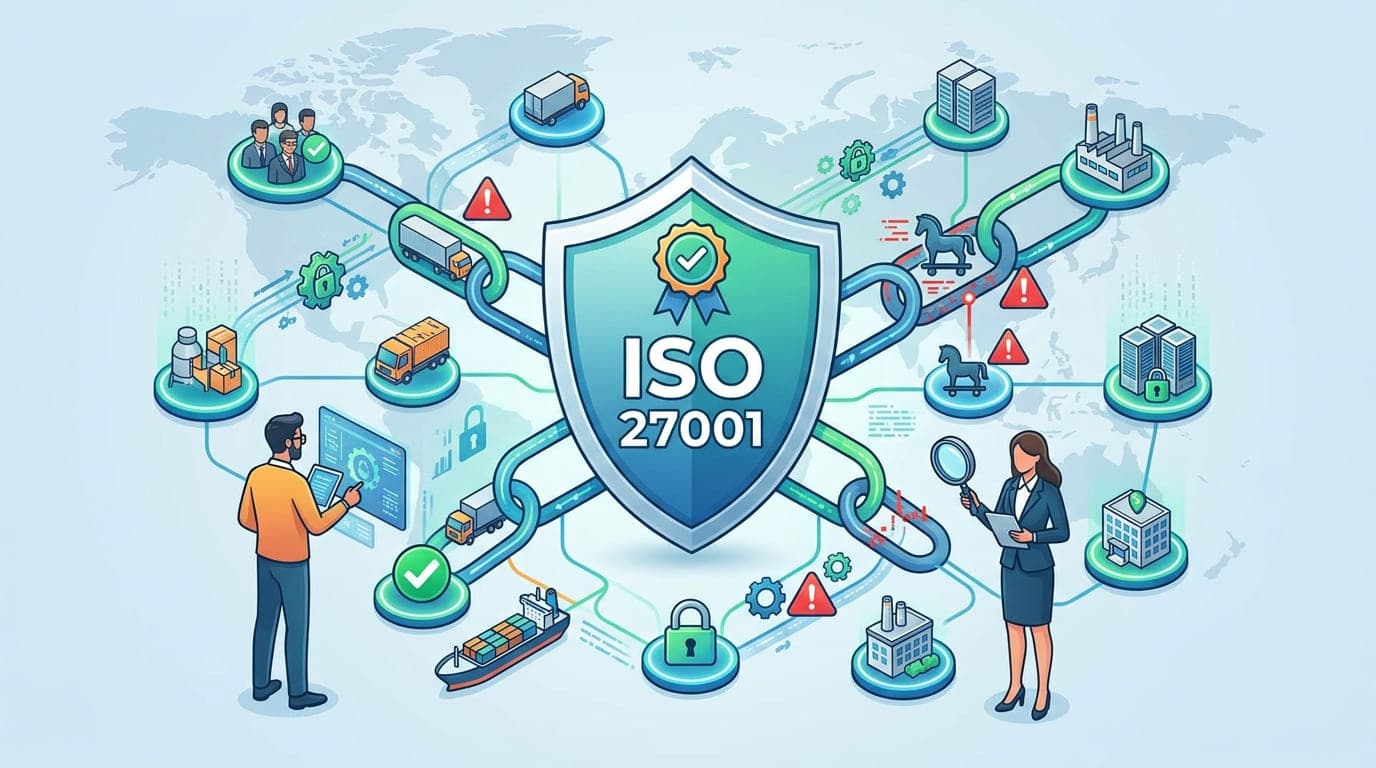
"Your security chain has many links. It takes only one weak link to break. ISO 27001 requires understanding and managing the entire chain, not just the links you can directly see."
Practical Implementation Roadmap
Let me give you a realistic timeline for implementing ISO 27001-compliant supplier security management. This is based on dozens of real implementations:
90-Day Quick Start Implementation
Month 1: Discovery and Foundation
Week 1-2: Complete vendor inventory across all departments
Week 3: Classify vendors by risk tier
Week 4: Prioritize critical/high vendors for immediate assessment
Month 2: Assessment and Documentation
Week 5-6: Assess top 20 critical/high-risk vendors
Week 7: Develop standard contract language and assessment templates
Week 8: Begin updating contracts with existing critical vendors
Month 3: Process and Monitoring
Week 9-10: Implement vendor monitoring procedures
Week 11: Train teams on vendor security requirements
Week 12: Document all procedures for ISO 27001 compliance
Reality Check: This gives you basic compliance. Full maturity takes 12-18 months.
Year One Milestones
Quarter | Milestone | Success Metrics |
|---|---|---|
Q1 | Foundation and critical vendors | 100% vendor inventory, top 20 vendors assessed |
Q2 | Process implementation | All new vendors follow security review, contracts updated |
Q3 | Monitoring and expansion | Monitoring active for critical vendors, 50% of high-risk vendors assessed |
Q4 | Maturity and audit readiness | 100% high-risk vendors assessed, successful pre-audit |
The Business Case for Supply Chain Security
I know what CFOs are thinking: "This sounds expensive." Let me reframe that.
Cost Comparison Analysis
Here's data from actual implementations I've led:
Organization Size | Implementation Cost | Annual Maintenance | Breach Cost (Industry Average) | ROI Timeline |
|---|---|---|---|---|
Small (< 50 employees) | $25,000-$50,000 | $15,000-$25,000 | $2.98M | Prevented by avoiding one vendor breach |
Medium (50-500) | $75,000-$150,000 | $40,000-$75,000 | $4.45M | 12-18 months |
Large (500+) | $200,000-$500,000 | $100,000-$200,000 | $5.97M | 6-12 months |
Additional Benefits Not Included in ROI:
Insurance premium reductions (15-40%)
Faster sales cycles with enterprise customers
Reduced audit costs through systematic documentation
Enhanced operational efficiency
Competitive advantage in procurement processes
The Million-Dollar Question
A CEO once asked me: "What's the ROI on vendor security?"
I responded: "What's the ROI on not going out of business?"
He didn't appreciate my flippancy. So I showed him the numbers from a competitor in his industry that had experienced a vendor breach:
Direct costs: $3.2M
Lost customers: 23% (annual revenue impact: $8.7M)
Regulatory fines: $1.8M
Reputation damage: Unmeasurable but real
His vendor security budget was approved the next day.
ISO 27001 Audit Preparation: What Auditors Look For
Having guided dozens of organizations through ISO 27001 audits, I can tell you exactly what auditors will scrutinize regarding supplier security:
Critical Evidence Required
Audit Area | Required Evidence | Common Gaps |
|---|---|---|
Supplier Identification | Complete vendor inventory with risk classifications | Incomplete inventory, missing shadow IT |
Security Requirements | Documented security requirements by vendor tier | Generic requirements, no risk-based differentiation |
Contract Clauses | Contracts containing specific security obligations | Security mentioned but not specified |
Assessments | Vendor security assessment records | Assessments not conducted or outdated |
Monitoring | Evidence of ongoing supplier performance monitoring | Initial assessment only, no continuous monitoring |
Incident Management | Procedures for handling vendor security incidents | No documented vendor incident procedures |
Access Management | Records of vendor access reviews | Access granted but never reviewed |
Offboarding | Documented vendor termination procedures with evidence | No formal offboarding process |
Auditor Questions You'll Face
Based on my experience sitting through hundreds of audit hours:
"Show me your vendor inventory and how you maintain it."
"How do you determine which vendors require security assessments?"
"Walk me through a recent vendor security assessment."
"Show me a contract with appropriate security clauses."
"How do you monitor vendor security performance?"
"What happens when a vendor experiences a security incident?"
"Show me evidence of vendor access reviews."
"How do you handle vendor offboarding?"
Pro Tip: Auditors don't expect perfection. They expect systematic processes, documented procedures, and evidence of follow-through. A small vendor security program that's consistently executed beats an elaborate program that exists only on paper.
The Future of Supply Chain Security
Let me share where I see this heading, based on emerging trends and regulatory developments:
Upcoming Changes to Watch
1. Mandatory Supply Chain Disclosure Several jurisdictions are moving toward mandatory disclosure of supply chain security practices. The EU's NIS2 Directive and US SEC cybersecurity rules both touch on vendor risk management.
2. Automated Vendor Risk Scoring We're seeing tools that continuously monitor vendor security posture using:
Public breach databases
Security ratings services
Financial health indicators
Certificate expiration tracking
Dark web monitoring
3. Blockchain for Supply Chain Verification Some industries are piloting blockchain-based verification of vendor security controls, creating immutable audit trails.
4. Cyber Risk Quantification CFOs want numbers, not "high/medium/low." We're moving toward quantifying vendor risk in financial terms ($X potential loss from Vendor Y).
Final Thoughts: Building a Security-First Vendor Culture
After fifteen years in this field, here's what I've learned: technology and processes matter, but culture matters more.
The most successful vendor security programs I've seen share common characteristics:
Executive sponsorship and engagement
Cross-functional collaboration (not just IT/Security)
Risk-based prioritization (not checkbox compliance)
Continuous improvement mindset
Open communication with vendors (partnership, not policing)
I worked with a company that transformed their vendor relationships by shifting from "compliance enforcement" to "security partnership." They shared threat intelligence with vendors. They offered guidance on improving security. They celebrated vendor security improvements.
The result? Vendors actually came to them proactively when security concerns arose. When one vendor detected potential compromise, they notified my client immediately—before investigation even confirmed a breach. That early warning prevented what could have been a major incident.
That's the goal: not just compliance, but collaborative security that makes everyone stronger.
"ISO 27001 supplier security isn't about distrusting vendors. It's about building trustworthy relationships through verification, transparency, and mutual commitment to security excellence."
Your Next Steps
If you're building or improving your supply chain security program:
This Week:
Create or update your vendor inventory
Classify vendors by risk level
Identify your top 10 highest-risk vendors
Review contracts for security clauses
This Month:
Develop vendor security assessment questionnaire
Assess your top 10 vendors
Create standard contract security language
Document your vendor security procedures
This Quarter:
Implement continuous monitoring for critical vendors
Update all high-risk vendor contracts
Train teams on vendor security requirements
Prepare vendor security documentation for ISO 27001 audit
This Year:
Achieve full compliance with ISO 27001 supplier controls
Build automated monitoring and tracking systems
Conduct vendor security tabletop exercises
Measure and optimize your program
Remember: you don't need to be perfect on day one. You need to start, stay consistent, and continuously improve.
The vendor that will breach you tomorrow is making decisions about security today. Your supply chain security program is the only defense you have against those decisions.
Make it count.
Ready to master ISO 27001 supply chain security? Subscribe to PentesterWorld for in-depth guides, templates, and real-world strategies from 15+ years in the cybersecurity trenches.